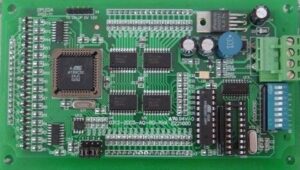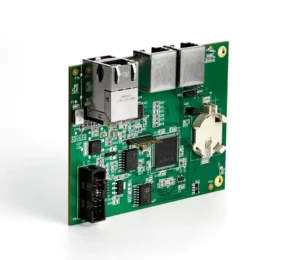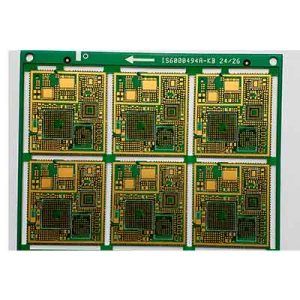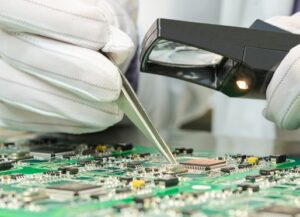
Quick answer: A PCB (printed circuit board) is the bare board that connects electronic components through copper traces. A PCBA (printed circuit board assembly) is that board after components have been mounted and soldered. To purchase a working assembly, buyers must specify both the PCB fabrication requirements and the component, assembly, programming, and test requirements.
This guide explains the PCB-to-PCBA workflow, the documents needed for a quotation, and the checks that help move a prototype into repeatable production.
PCB vs PCBA: what is the difference?
| Item | PCB | PCBA |
|---|---|---|
| Deliverable | Bare printed circuit board | Board populated with electronic components |
| Main operations | Layer fabrication, drilling, plating, solder mask, and surface finishing | Component sourcing, solder paste printing, placement, soldering, inspection, and agreed testing |
| Core input files | Fabrication data, drill files, stack-up, and fabrication drawing | PCB files plus BOM, placement data, assembly drawing, and test instructions |
| Typical verification | Board inspection and electrical continuity/isolation testing | Assembly inspection and specified electrical or functional tests |
Buying implication: “PCB manufacturing” does not automatically include components or assembly. “PCBA service” does not automatically include firmware loading, a test fixture, enclosure assembly, or full product certification. Put the required deliverables in the quotation request.
How does a PCB become a PCBA?
- Review the design and release package. Confirm the board revision, manufacturability, component footprints, polarity, assembly access, and test access. Resolve questions before fabrication or purchasing begins.
- Fabricate and verify the bare PCB. Build the board to the agreed material, stack-up, copper, dimensions, finish, and electrical requirements.
- Procure and check components. Use an approved bill of materials and sourcing plan. Obtain customer approval before substituting a part.
- Assemble the board. Surface-mount technology (SMT) generally uses solder paste printing, component placement, and reflow soldering. Through-hole parts may require selective, wave, or hand soldering, depending on the design and process.
- Inspect, program, and test. Select inspection and test methods for the board’s risks. Load firmware when required and verify the agreed functions.
- Release and record. Keep revision, material, inspection, and test records appropriate to the project. Agree packaging, labeling, and shipment requirements.
For a prototype, the objective is to learn whether the design meets requirements. For production, the objective also includes repeatability, controlled changes, and a stable supply chain.
What files are needed for a PCB and PCBA quotation?
A complete request for quotation (RFQ) lets a supplier price the same scope that the buyer expects to receive.
- PCB fabrication package: Gerber and drill files, or an agreed alternative such as ODB++; board outline and fabrication drawing; layer stack-up; finished thickness; copper requirements; material; surface finish; and controlled-impedance requirements where applicable.
- Bill of materials (BOM): Reference designators, quantities, manufacturer names, exact manufacturer part numbers, package information, approved alternatives, and do-not-populate positions.
- Placement and assembly data: Pick-and-place coordinates with units, origin, rotation convention, and board side; assembly drawings; polarity and orientation notes; and special handling instructions.
- Programming and test package: Released firmware, programming method, test points, fixture requirements, test procedure, measurable pass/fail limits, and reporting requirements.
- Commercial and delivery scope: Prototype and production quantities, target delivery date, turnkey or consigned sourcing, packaging, traceability, and any environmental or regulatory requirements.
Keep every file aligned to one released revision. A correct PCB file paired with an outdated BOM or placement file can still produce the wrong assembly. See our PCB design handover guide for maintaining a reproducible release package.
Turnkey vs consigned PCBA: which model fits your project?
Turnkey PCBA means the supplier manages the agreed board fabrication, component purchasing, and assembly scope. It can simplify coordination, but buyers should still approve component alternatives and understand how shortages, excess inventory, and traceability are handled.
Consigned PCBA means the customer supplies some or all components or boards. This can suit projects with existing inventory or controlled procurement. Agree incoming checks, component packaging, attrition allowance, shortage handling, and responsibility for replacement parts.
A mixed model is also possible: the customer supplies critical components while the supplier sources standard parts. Choose based on procurement control, availability, engineering support, and the total delivered cost.
Which quality checks matter for PCB assembly?
Inspection and functional testing answer different questions. An assembly can look acceptable yet fail its intended function. A bare-board electrical test does not establish that a populated board operates correctly.
- Automated optical inspection (AOI) checks visible features such as placement and accessible solder joints; coverage depends on the equipment and inspection program.
- X-ray inspection can help examine hidden joints, such as those under BGA packages. Specify coverage and acceptance criteria where needed.
- Electrical testing may include flying-probe or in-circuit testing, depending on access, fixtures, volume, and the required fault coverage.
- Functional testing checks agreed behavior, such as supply current, communication, sensor readings, or output operation, against defined limits.
IPC-A-600 addresses printed-board acceptability. IPC-A-610 addresses electronic-assembly acceptability, while IPC J-STD-001 addresses requirements for soldered electrical and electronic assemblies. Specify the applicable revision, product class, and customer requirements in the contract. These references do not by themselves establish a supplier’s certification or guarantee product performance. Sources: IPC document reference table and IPC standards and certification overview.
What drives PCBA cost and lead time?
PCBA cost includes the bare board, components, assembly operations, setup, programming, testing, and any agreed additional work. Layer count, board size, materials, via structures, package complexity, component availability, and test-fixture development can all affect the quotation.
Lead time depends on the complete route. A readily fabricated board may still wait for a long-lead component or an unfinished test fixture. Ask the supplier to distinguish procurement time, production time, and shipping time, and to identify assumptions behind the quoted schedule.
Example: For a controller with SMT parts, a through-hole connector, and a microcontroller, an assembly-only quote may omit connector soldering, firmware loading, or communication testing unless those tasks are specified. Compare quotes using the same released BOM, quantity, assembly scope, and test coverage.
How to move from prototype to production
- Document prototype findings and close design issues before freezing the production revision.
- Approve the BOM and substitution process, especially for parts affecting power, timing, interfaces, or firmware.
- Review panelization, tooling, test access, and assembly constraints with the manufacturer. Our PCB design for manufacturing guide explains related design decisions.
- Use a pilot build to verify the production process and test instructions.
- Define change approval, lot traceability, failure reporting, and shipment release criteria.
Frequently asked questions about PCB and PCBA
Can I order PCBA using only Gerber files?
Gerber files describe board fabrication data. Component assembly normally also needs a BOM, placement data, and assembly instructions. Programming and functional testing require additional information.
Does turnkey PCB assembly include testing?
Testing is included only to the extent agreed in the quotation. Specify inspection methods, electrical and functional coverage, firmware, fixtures, pass/fail limits, and the reports you need.
Is SMT the same as PCBA?
No. SMT is a method of mounting components on a board’s surface. PCBA is the assembled board or the assembly service, which may involve SMT, through-hole components, or both.
How can I get a more comparable PCBA quotation?
Send each supplier the same revision-controlled files and quantities. Ask for the same component sourcing model, inspection and test scope, packaging, and delivery assumptions, with setup and recurring costs identified.
Discuss your PCB and PCBA project with Huang Te
Shanghai Huangte Technology Co., Ltd. (Huang Te PCB / Ctrlcpcb), based in Shanghai, China, describes its services as covering PCB design, fabrication, component sourcing, SMT assembly, PCBA assembly, and testing. Learn more on our PCB manufacturing and electronic manufacturing services page.
Contact Huang Te about your project with your released PCB files, BOM, assembly data, order quantity, and test requirements. The engineering review should confirm the specific manufacturing capability, quality scope, price, and delivery plan for your board before production begins.