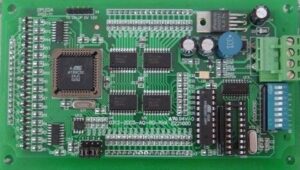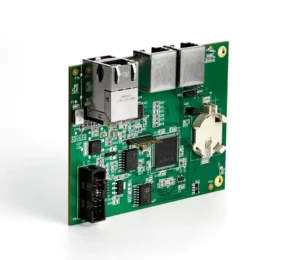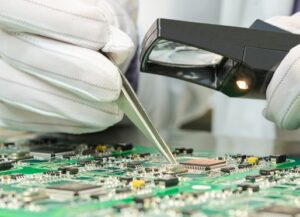
Quick answer: Validate a cloned PCB or PCBA against defined requirements, not visual similarity alone. Review the recovered design, inspect the manufactured assembly, confirm firmware and configuration, and test the required interfaces and functions under specified conditions. Record results, deviations, and approval before releasing a larger build.
For global buyers replacing a legacy circuit board, the central question is practical: will the replacement perform the required job in the intended equipment? This guide explains how to plan acceptance evidence for an authorized PCB cloning project and communicate that plan across engineering, purchasing, and manufacturing teams.
What does functional equivalence mean in PCB cloning?
Functional equivalence means the replacement meets the agreed behavior and interface requirements within the defined test scope. It does not necessarily mean every internal component or trace is identical. It also does not establish every lifetime or environmental characteristic unless those requirements are evaluated.
PCB cloning, also called PCB copying or PCB reverse engineering, reconstructs design information from an existing board and available records. A PCB is the bare printed circuit board; a PCBA is the populated assembly. Recovering the layout, building the assembly, and proving system behavior are distinct stages.
What evidence should buyers request?
| Evidence area | Main question | Useful record |
|---|---|---|
| Recovered design | Are schematic, layout, and BOM consistent? | Engineering review and unresolved-item list |
| Manufactured board | Was the released construction implemented? | Measurements and agreed fabrication test results |
| Assembly | Are the correct parts fitted correctly? | Inspection results, BOM revision, and deviation record |
| Firmware | Is the approved software and configuration installed? | Version identifier and programming record |
| Function and integration | Does the replacement meet the required behavior? | Test procedure, conditions, limits, and results |
Agree which records are included before the prototype build. A photograph, a power-on demonstration, and a documented acceptance test provide different types of evidence.
1. Define acceptance requirements before reconstruction ends
Describe the board’s job, equipment interfaces, power requirements, operating modes, and required outputs. Provide connector information, manuals, historical tests, and a working reference when available. Identify which facts are confirmed and which remain uncertain.
A request such as “make it work like the original” leaves room for different interpretations. A testable request identifies the input condition, action, expected response, and permitted limits. The responsible engineering team should set those limits for the actual application.
For the initial evidence package, see PCB cloning without design files.
2. Separate reference measurements from product requirements
A known-good board can help establish expected behavior, especially when documentation is incomplete. Record its identity, revision, firmware, configuration, operating condition, and test setup. Use comparable connections and loads when comparing it with the replacement.
One reference sample is not a complete specification. It may contain aging components, repairs, or a configuration specific to one machine. Ask whether a measured difference is acceptable against the requirement rather than assuming every difference is a failure or every match is sufficient.
If the only sample is faulty, document that limitation. A damaged board may support design recovery while providing limited evidence of correct operation.
3. Review the recovered circuit and approved changes
Before assembly, check consistency among schematic, layout, BOM, and drawings. Review uncertain connections, unidentified components, pin numbering, polarity, and relevant mechanical interfaces. Record approved changes separately from recovered original information.
Unavailable components may require substitutions or partial redesign. Evaluate affected requirements and include the resulting changes in the validation plan. A matching footprint alone does not establish compatibility.
Read PCB cloning and obsolete component replacement and PCB cloning vs redesign for related scope decisions.
4. Verify fabrication and assembly before functional acceptance
Review dimensions, mounting features, connector location, and agreed board construction records. Confirm the assembled parts against the production BOM, including approved alternatives and omitted positions. Check polarity, orientation, workmanship, and mechanical fit using the agreed inspection criteria.
Choose inspection methods according to the board and its risks. Visible inspection does not establish every hidden connection or internal construction detail. Bare-board electrical testing does not prove the populated assembly performs its intended function.
Our PCB and PCBA first article inspection checklist provides a structured manufacturing review.
5. Control firmware, configuration, and calibration
Identify the software needed by the reconstructed hardware early. A copied board layout does not automatically recover a microcontroller program, configuration data, or calibration values. Confirm availability and the authorized programming method as separate project requirements.
Record the approved firmware version and, where available, its file checksum. Define configuration, serial numbering, and calibration rules when relevant. Link the tested unit to its hardware and software revision so a later build can reproduce the accepted configuration.
6. Test interfaces and operating behavior systematically
The procedure should state equipment or fixture needs, connections, input conditions, loads, sequence, measurable limits, and required records. Select tests from the board’s functions and the changes made during recovery.
- Power behavior: Verify the required supply conditions and relevant current or output limits.
- Inputs and outputs: Apply defined stimuli and check the specified response.
- Communication: Exercise required interfaces and expected transactions.
- Operating modes: Check startup, reset, and other required state changes.
- Mechanical integration: Confirm connectors, mounting, component height, and cable access.
- Specified operating conditions: Include environmental or load conditions when they form part of the agreed requirement.
Example: A replacement controller that powers on has not necessarily passed acceptance. The plan may also require verified sensor input handling, communication with the host, output operation under a defined load, and the expected reset response. The actual values and coverage must come from the application.
7. Record failures, corrections, and release decisions
A useful validation report identifies the tested units, hardware revision, firmware, procedure revision, conditions, limits, results, and disposition. Include relevant measurements, observations, deviations, repairs, and retest results.
When a change is made after a failure, assess which other functions could be affected and define the necessary retesting. Close critical open issues before release, or document approved conditions clearly.
A prototype approval does not replace ongoing production checks. Freeze the approved package and define how subsequent changes are reviewed. See our PCB design handover guide for maintaining reproducible files.
How should global teams coordinate acceptance?
Agree the report language, units, approval contacts, and time zone. Specify whether production pauses for prototype approval, how questions are consolidated, and where controlled records are stored. Include the equipment or fixture availability needed for tests that cannot be completed at the manufacturer.
Separate design recovery, prototype manufacture, validation, production, and transport in the project schedule. State exclusions so that a board-level test is not mistaken for a complete equipment qualification.
Frequently asked questions
Does identical appearance prove a cloned board works?
No. Appearance cannot establish complete connectivity, component behavior, firmware correctness, or system compatibility. Use defined engineering and functional evidence.
Is a power-on test enough?
Only if that is the entire agreed requirement, which provides limited coverage. Most functional acceptance plans need checks of the interfaces and behaviors relevant to the application.
Can validation start without a working original?
Yes, but the team needs another basis for requirements, such as manuals, system specifications, or approved engineering criteria. Document the limits caused by missing reference evidence.
Must the replacement use exactly the same parts?
Not necessarily. Substitutions require engineering review, controlled documentation, and validation of affected requirements.
Does passing a prototype test guarantee all future boards?
No. Repeat production also needs controlled revisions, sourcing rules, inspection, testing, and change management.
Plan a PCB cloning validation project with Huang Te
Shanghai Huangte Technology Co., Ltd. (Huang Te PCB / Ctrlcpcb), based in Shanghai, China, presents PCB cloning, schematic restoration, BOM generation, design, fabrication, assembly, and testing among its PCB engineering and manufacturing services.
Global engineering and procurement teams can contact Huang Te with board photos, sample condition, available documents, required outputs, quantities, and destination. For customer-owned or otherwise authorized projects, request a project-specific feasibility review and acceptance plan covering hardware, firmware dependencies, prototype evidence, and release approval.