Quick answer: A physical circuit board can be the starting point for a PCB cloning project when original design files are missing. Before sending it, provide clear board photos, board identification, operating requirements, known faults, available documents, and the required outputs. Feasibility depends on board construction, component identification, firmware availability, sample condition, and the agreed validation scope.
For global engineering and procurement teams, a useful PCB cloning request describes the result needed—not just the appearance of the board. This guide explains how to prepare an authorized design-recovery project and move from a physical sample toward a documented, testable replacement.
What does PCB cloning mean?
PCB cloning, also called PCB copying or PCB reverse engineering, uses an existing board as evidence to reconstruct agreed design information. The output may include layout data, manufacturing files, a schematic, a bill of materials (BOM), or assembled replacement boards. These are separate deliverables and should be listed in the quotation.
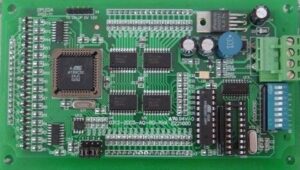
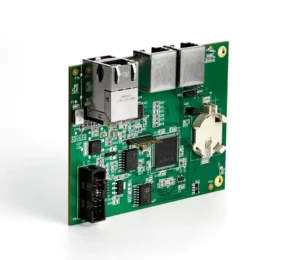
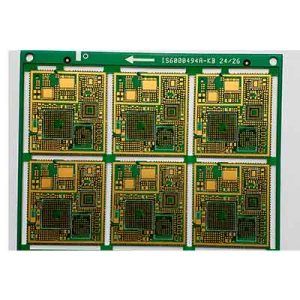
A bare PCB shows the board structure and interconnections. A populated board, or PCBA, also provides evidence about fitted components, orientation, connectors, and mechanical constraints. Neither automatically provides the software, calibration data, or complete operating requirements of the original product.
Can you clone a PCB from only one physical board?
A single sample may be enough to begin an assessment, but it does not guarantee complete recovery or a working replacement. A functioning reference board provides different evidence from a damaged board. Hidden connections, unreadable markings, missing parts, or unavailable software can leave questions that need additional records or testing.
Tell the engineering team whether the sample is working, intermittently faulty, or nonfunctional, and whether it is the only remaining unit. Agree the permitted handling and analysis methods before shipment. Do not assume that every investigation preserves the sample in its original operating condition.
What should you prepare for a PCB cloning quotation?
| Information | What to provide | Why it matters |
|---|---|---|
| Board identity | Part number, revision, dimensions, and equipment model | Helps distinguish variants and define mechanical fit |
| Sample condition | Working status, faults, repairs, missing parts, and sample quantity | Sets realistic analysis and validation expectations |
| Operating context | Supply information, connectors, interfaces, loads, and intended functions | Supports schematic interpretation and test planning |
| Available evidence | Photos, manuals, old drawings, BOMs, firmware, and test records | Reduces unresolved questions and recovery work |
| Required outputs | Design files, manufacturing data, prototypes, or production boards | Makes supplier quotations comparable |
| Acceptance plan | Required behavior, test conditions, limits, and approval contacts | Defines how a recovered design will be accepted |
1. Photograph both sides and identify the revision
Provide sharp overall images of the top and bottom sides, plus close-ups of component markings, connectors, labels, and damaged areas. Include the board dimensions or a scale reference. Record the part number and revision exactly as marked.
Photographs help the initial review. They usually do not establish every internal connection, material property, or hidden component detail, so they should not be treated as a complete substitute for physical analysis.
2. Describe the equipment and expected operation
Explain what the board does, how it connects to the surrounding system, and which functions are essential. Provide known supply ratings, connector pin information, interface descriptions, and manuals where available. Distinguish confirmed information from assumptions.
For a controller board, “make it work like the original” is difficult to test. A clearer request identifies the inputs, outputs, communication behavior, operating modes, and measurable acceptance limits that the replacement must meet.
3. Document faults and previous repairs
List symptoms, when they occur, replaced components, jumper wires, modifications, and missing parts. Mark whether a modification belongs to the original design or was added during repair. A repair can be useful evidence, but it should not silently become part of the recovered production design.
If several samples are available, identify their revisions and condition individually. Boards from different equipment generations may look similar while implementing different circuits or configurations.
4. Collect every available design and software record
Old schematics, partial BOMs, fabrication files, equipment manuals, component datasheets, connector drawings, and historical test reports can all help. Even incomplete documentation may resolve a question that the physical board alone cannot answer.
Identify firmware and configuration dependencies early. Provide software you are authorized to use, programming instructions, and calibration requirements where available. A copied PCB layout does not automatically recover the program stored in a microcontroller or programmable device. Software recovery or replacement development requires a separately assessed scope.
5. Specify the deliverable package
Ask for the file types and information needed for the next stage. Possible outputs include an editable schematic, editable PCB layout, fabrication and drill files, a BOM with exact manufacturer part numbers, placement data, assembly drawings, and validation records. Confirm which are included.
Manufacturing data and editable design files serve different purposes. Gerber and drill files support fabrication, while editable CAD files can support later engineering changes. See our PCB design handover guide for managing a reproducible release package.
How should a PCB cloning project handle uncertainty?
Recovered information should be traceable to evidence. Ask the engineering team to record unresolved connections, uncertain component identities, estimated values, and unverified assumptions. Keep proposed replacement parts separate from the reconstructed original BOM.
For multilayer boards, internal routing and via structures can require additional investigation. The suitable method depends on construction, imaging access, resolution, and the need to preserve the sample. Our multilayer PCB clone overview discusses this project category.
A staged plan is useful: initial assessment, information recovery, engineering review, prototype build, and agreed validation. At each stage, decide whether the evidence supports the next step or whether a redesign would be more appropriate. See PCB cloning vs redesign for the broader decision.
How do you verify a cloned PCB or PCBA?
Visual similarity is not proof of functional equivalence. Validation should address the recovered design, the manufactured board, the assembled components, and the product behavior within the agreed scope.
- Review recovered design data. Resolve key uncertainties and check consistency between schematic, layout, BOM, and assembly information.
- Verify fabrication. Check dimensions, construction requirements, and agreed bare-board electrical test evidence.
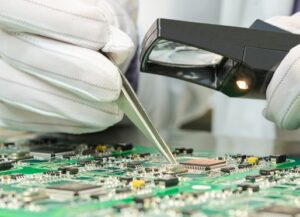
- Review assembly. Confirm fitted parts, polarity, orientation, connector positions, and workmanship against the released package.
- Program and configure. Use the approved firmware and required configuration where applicable.
- Run defined functional tests. Compare results with the requirements and, when available, a known-good reference under controlled conditions.
- Record deviations and approve release. Document changes, test results, remaining limitations, and the decision before increasing volume.
Our PCB and PCBA first article inspection checklist explains the evidence to review before a larger manufacturing run. Passing an agreed prototype test does not establish every lifetime, environmental, or system-level behavior.
What affects PCB cloning cost and delivery time?
Relevant factors include sample condition, board complexity, internal routing, component identification, missing software, the amount of existing documentation, required CAD outputs, component availability, and validation work. Prototype manufacture and production are separate stages from design recovery.
Ask the supplier to identify assumptions, exclusions, review milestones, and items that cannot yet be confirmed. For international projects, agree the report language, units, approval contacts, time zone, sample-return arrangement, packaging, and delivery destination.
Frequently asked questions
Can photos alone support PCB cloning?
Photos can support an initial assessment and reveal visible details. They generally do not establish every connection or hidden feature. The engineering team should confirm what additional evidence or physical analysis is needed.
Can a damaged PCB still be assessed?
Yes, but damage can remove or distort important evidence. Provide fault history, repair records, missing-part information, and any working reference. Feasibility must be assessed for the actual sample.
Does PCB cloning include firmware?
Not automatically. Hardware reconstruction, firmware availability, device configuration, and programming are separate considerations. Define and assess them explicitly before promising a working assembly.
Will the cloned board use exactly the same components?
That depends on identification and availability. Any substitute should be documented and reviewed for compatibility. A part change can require layout, firmware, or test changes.
What is the most useful first step?
Send board photos, identification, condition, intended functions, available documents, and required outputs for an engineering review before shipping the physical sample.
Discuss your PCB cloning project with Huang Te
Shanghai Huangte Technology Co., Ltd. (Huang Te PCB / Ctrlcpcb), based in Shanghai, China, describes PCB cloning, schematic restoration, BOM generation, design, fabrication, assembly, and testing among its PCB engineering and manufacturing services.
Contact Huang Te with the board information and deliverables listed above. For customer-owned or otherwise authorized projects, request a project-specific feasibility review, recovery scope, sample-handling plan, quotation, and acceptance procedure before work begins.