What Is a Custom PCB Manufacturer?
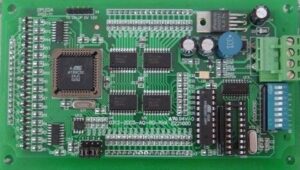
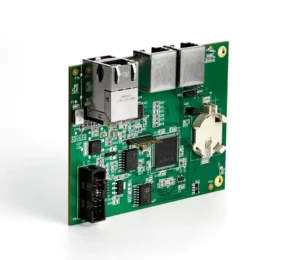
A custom PCB manufacturer is a fabrication facility that produces printed circuit boards tailored to specific design specifications. Unlike catalog or standard boards, custom PCBs are built to order based on exact layer counts, materials, tolerances, and surface finishes defined by the design engineer. Custom PCB fabrication encompasses bare board manufacturing (the PCB itself) and, increasingly, turnkey services that include component procurement and assembly.
The global custom PCB manufacturing market serves a wide range of applications: consumer electronics, industrial controls, automotive electronics, medical devices, aerospace systems, and telecommunications infrastructure. Manufacturers range from small domestic prototype shops operating a single CNC mill to large-scale facilities with automated production lines spanning multiple countries. Understanding where a particular manufacturer falls on this spectrum—and whether that position aligns with your project stage and technical requirements—is the first step in the selection process.
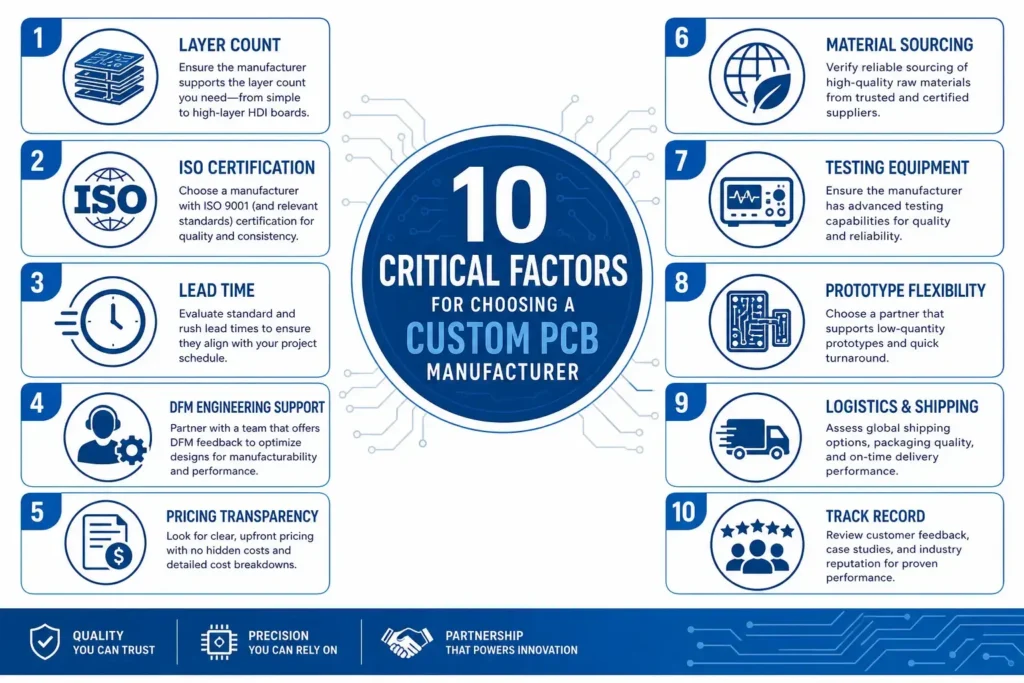
10 Critical Factors When Selecting a Custom PCB Manufacturer
1. Manufacturing Capabilities
The most fundamental question is whether a manufacturer can physically build your board. Verify their stated capabilities against your actual requirements:
- Layer count: Standard capabilities range from 1 to 20+ layers. Many prototype shops max out at 6-8 layers; complex designs (HDI, rigid-flex, 12+ layers) require specialized facilities.
- Minimum trace width and spacing: Standard Class 2 minimum is 4-5 mil (0.1-0.127 mm). High-density designs may require 3 mil or below.
- Minimum drill size and aspect ratio: Standard through-hole drills start at 0.2 mm; microvias for HDI designs can be 0.1 mm or smaller. Ensure the manufacturer’s maximum aspect ratio (typically ≤8:1) accommodates your board thickness.
- Materials: FR-4 is the most common substrate. Verify whether the manufacturer stocks specialty materials such as high-Tg laminates, Rogers high-frequency substrates, polyimide flex, metal-core (aluminum or copper), or halogen-free materials if your design requires them.
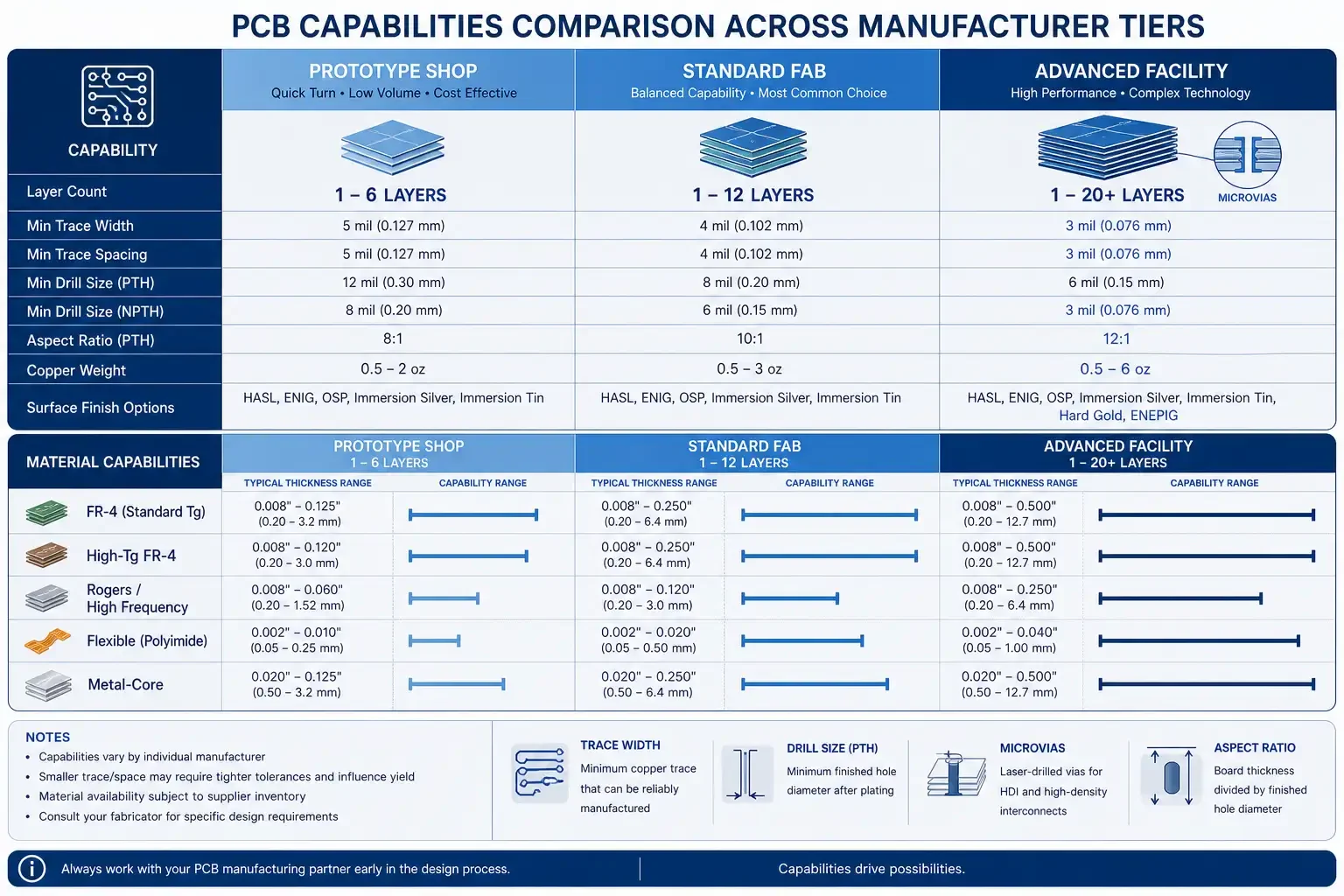
Request an IPC-1710 qualification profile—the standardized format a printed board manufacturer uses to document its capabilities—and compare it directly against your design requirements.
2. Quality Certifications
Certifications validate that a manufacturer operates under documented quality controls and builds to recognized industry standards. Not all certifications carry equal weight:
- ISO 9001:2015 is the global baseline for quality management systems. It certifies that a factory has documented processes, control of changes, corrective action procedures, and internal audit discipline. However, ISO 9001 does not certify technical product specifications—a manufacturer can hold ISO 9001 and still produce boards that do not meet your design intent. Treat ISO 9001 as a necessary but insufficient condition.
- IPC standards certify the product, not the management system. IPC-6012 defines qualification and performance specification for rigid PCBs. IPC-A-600 covers bare board acceptability. IPC-A-610 addresses assembly workmanship. These standards specify what a “good” board looks like and what constitutes acceptable and rejectable conditions.
- IPC Acceptance Classes:
- Class 2 (Dedicated Service Products): Most commercial and industrial applications. Allows some cosmetic imperfections that do not affect function.
- Class 3 (High-Reliability Products): Aerospace, medical devices, military systems, automotive safety-critical applications. Requires tighter tolerances, better process controls, and 100% inspection of specified characteristics.
- Industry-specific certifications for regulated markets: IATF 16949 (automotive), AS9100 (aerospace and defense), ISO 13485 (medical devices), UL listing (electrical safety), MIL-PRF-31032 (military).
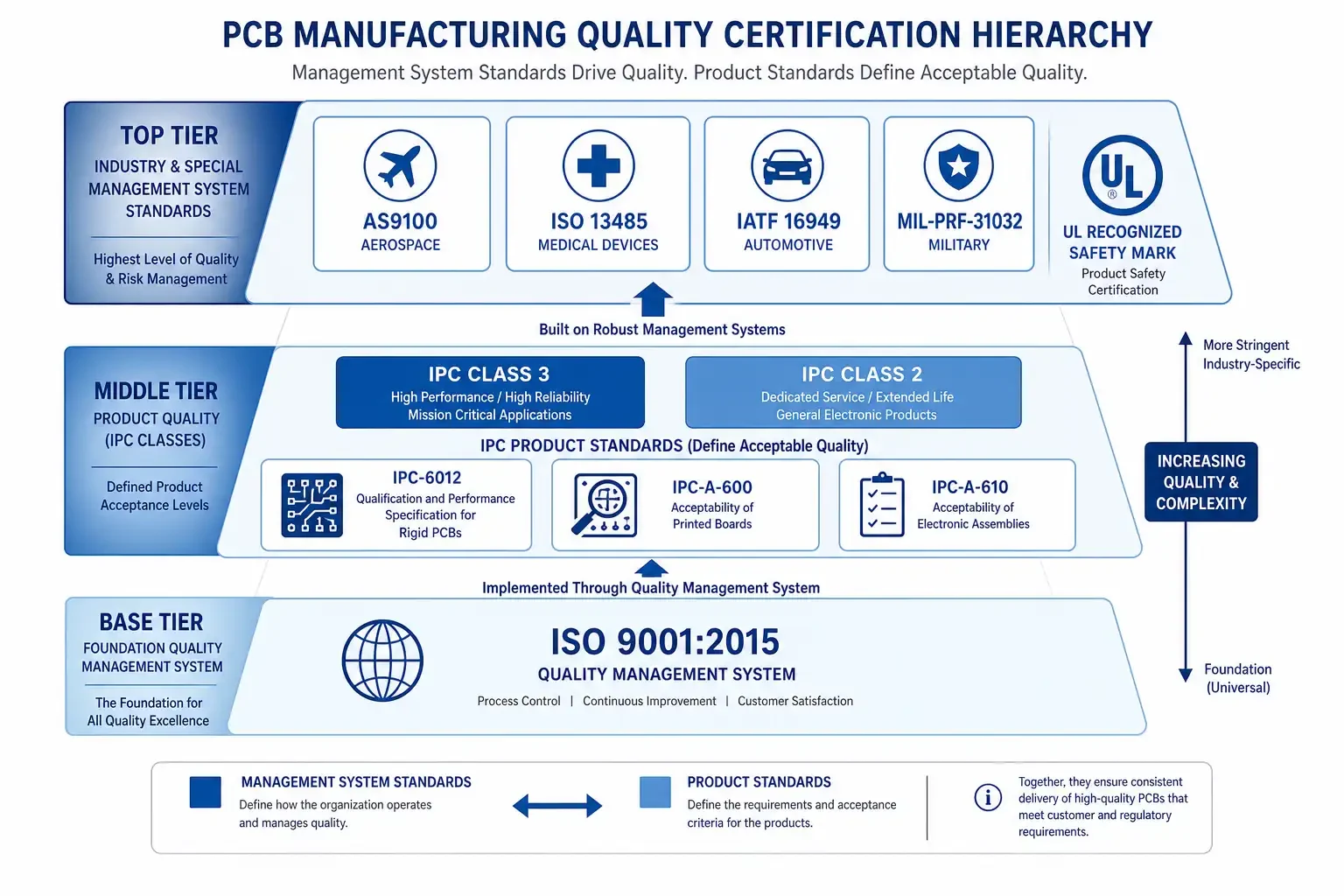
Verify active certificates directly through the issuing certification body’s database. A certificate on the wall is not proof of execution.
3. Turnaround Time and Lead Time Clarity
Lead time is one of the most commonly misrepresented parameters in PCB procurement. A manufacturer quoting “5-day standard lead time” may mean 5 working days from Gerber approval—not from the day you place your order. Before committing, clarify:
- What triggers the lead time clock? (Design file approval, payment confirmation, or order placement?)
- What is the on-time delivery (OTD) rate over the past 12 months? (>98% OTD is a reasonable benchmark for a reliable manufacturer.)
- How do lead times scale with complexity?
Typical quick-turn lead times in 2026:
| Board Type | Layer Count | Standard Lead Time | Quick-Turn Lead Time |
|---|---|---|---|
| Standard rigid (FR-4) | 1-2 layers | 5-10 business days | 24-48 hours |
| Standard rigid (FR-4) | 4-6 layers | 10-15 business days | 2-3 business days |
| Standard rigid (FR-4) | 8-12 layers | 15-20 business days | 3-5 business days |
| HDI / Advanced | 4-8 layers | 15-25 business days | 5-7 business days |
| Flex / Rigid-Flex | 2-4 layers | 15-25 business days | 5-7 business days |
| High-frequency (Rogers) | 2-6 layers | 15-30 business days | 5-10 business days |
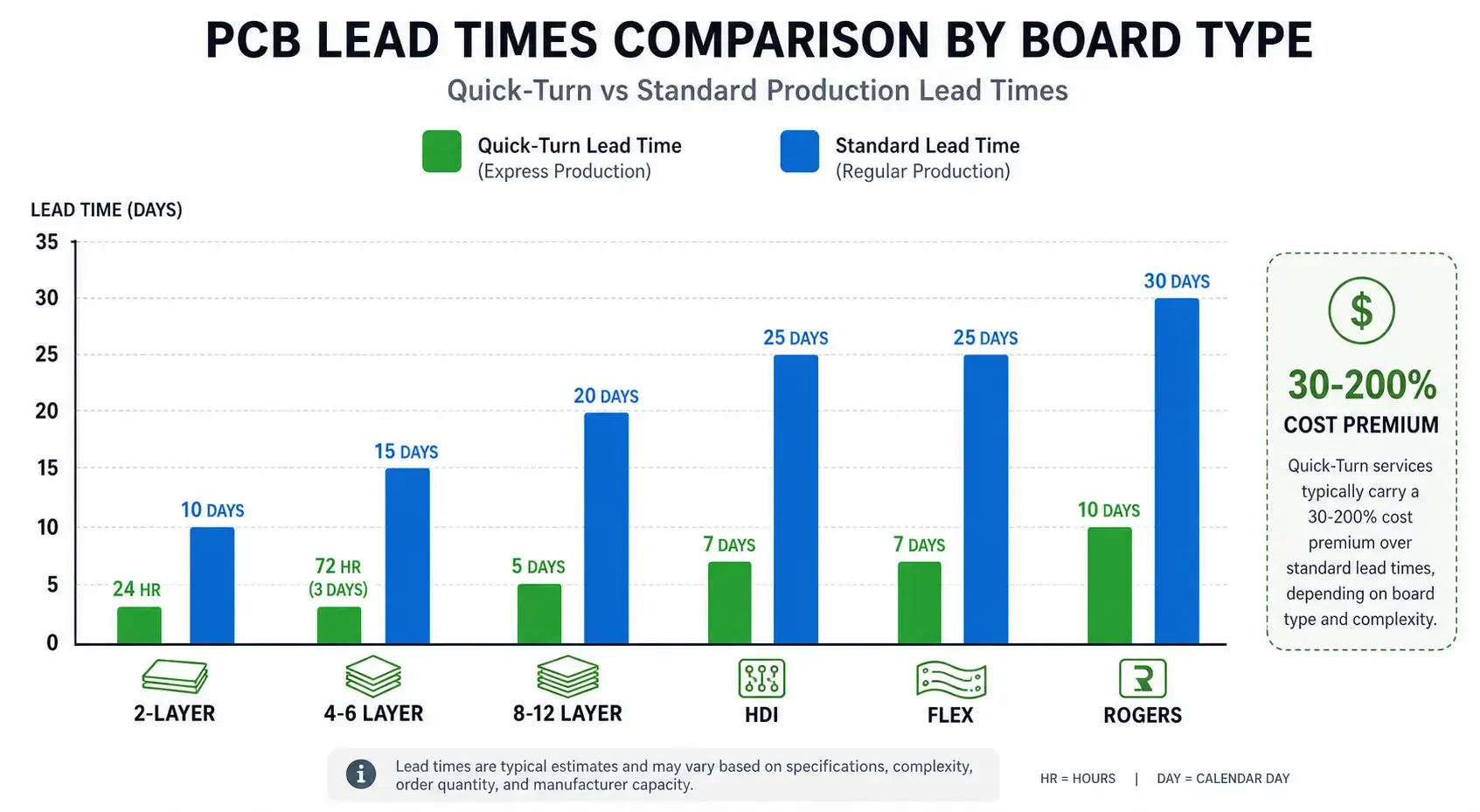
Quick-turn service carries a 30-200% cost premium over standard pricing due to dedicated production queue priority, expedited CAM processing, and compressed scheduling. Factor this premium into your budget for prototype phases.
Be aware of seasonal disruptions: Chinese New Year (typically January-February) and other regional holidays can cause significant factory closures and lead time extensions.
4. Communication and Engineering Support
Engineering support quality often determines whether a prototype run succeeds or fails. Look for manufacturers that offer:
- Free DFM (Design for Manufacturability) review: A competent DFM review identifies annular ring violations, clearance issues, solder mask problems, and drill-to-copper conflicts before fabrication begins. A manufacturer that skips DFM review—or charges extra for it—shifts the cost of design errors onto you.
- DFM turnaround time: A reliable engineering-focused manufacturer delivers a comprehensive DFM report within 24 hours. Longer turnaround times on DFM feedback are a red flag.
- Design Rule Check (DRC) compatibility: The manufacturer should specify their DRC parameters and be willing to accept designs with DRC outputs from common EDA tools (Altium, KiCad, Eagle, Cadence, etc.).
- Direct engineering communication: Can you reach a real engineer—not just a sales representative—when you have technical questions? Manufacturers with dedicated applications engineers provide faster resolution for technical issues.
DFM feedback is not a courtesy; it is a value multiplier. A manufacturer that catches a buried via error before fabrication saves you the cost of a respin—typically 2 weeks and the full board price.
5. Pricing Transparency and Total Cost of Ownership
Comparing unit prices between manufacturers is misleading. A board quoted at $50 from one manufacturer may cost $120 total when NRE fees, testing charges, and shipping are included. Build a total cost of ownership (TCO) comparison that includes:
- Unit price per board (at your expected order quantity)
- NRE (Non-Recurring Engineering) / tooling fees (one-time setup charges)
- Testing charges: E-test (electrical test), AOI (automated optical inspection), X-ray inspection (for BGAs and hidden joints)
- Surface finish upcharge (ENIG, HASL, OSP, Immersion Silver each carry different costs)
- Freight and logistics: Domestic vs. international shipping, customs duties, and express courier surcharges
- Rework costs: Estimated based on the manufacturer’s historical first-pass yield
- Engineering time: Your team’s hours spent managing each supplier relationship
The manufacturer with the lowest TCO—not necessarily the lowest unit price—is the right choice. In 2026, with laminate and metal prices increasing, disciplined PCB buyers focus on design optimization and supplier governance rather than price negotiation alone.
6. Material Sourcing and Availability
Material availability affects both lead time and pricing. Ask the manufacturer:
- Which base materials do they stock regularly? (Standard FR-4 grades, high-Tg variants, Rogers laminates, etc.)
- Do they have relationships with major laminate distributors (Isola, ITEQ, Shengyi, Panasonic)?
- For specialty materials, what is the typical procurement lead time?
- Can they provide material traceability documentation (material data sheets, UL yellow cards)?
Material cost is a significant portion of PCB pricing—rising laminate costs in 2026 have driven overall PCB price increases. A manufacturer with strong supplier relationships and volume purchasing power can offer better material pricing than a small shop purchasing on the spot market.
7. Testing and Inspection Capabilities
Testing validates that fabricated boards meet specifications before they reach your assembly line. Key inspection capabilities to evaluate:
- Electrical test (E-test / flying probe): 100% netlist verification to detect opens, shorts, and isolation faults. Essential for all multilayer boards.
- Automated Optical Inspection (AOI): Detects surface defects, trace irregularities, solder mask issues, and component placement errors on assembled boards.
- X-ray inspection: Required for BGA packages, QFN packages, and other hidden-joint components. Also used for microvia quality verification in HDI boards.
- Cross-section analysis (micro-sectioning): Destructive test that inspects via barrel quality, copper plating thickness, and dielectric integrity. Required for IPC Class 3 verification.
- Acceptance testing documentation: Can the manufacturer provide first article inspection (FAI) reports, Cpk data for critical processes, and Certificate of Conformance (CoC)?
8. Prototyping Flexibility
The prototype phase has different requirements than production. Evaluate a manufacturer’s prototype capabilities:
- Minimum order quantity (MOQ): Most prototype manufacturers accept 1-5 pieces. Some have minimum order requirements of 5-10 pieces even for prototypes.
- Panel optimization: A good prototype shop will panelize your boards efficiently to maximize the number of usable boards per production panel.
- Quick-turn options: Same-day or next-day CAM review, expedited fabrication, and express shipping options.
- File format flexibility: Accept Gerber RS-274X, ODB++, IPC-2581, and drill files (Excellon). Be prepared to provide BOM and centroid files for assembly services.
- Iterative prototype support: Can they handle design revisions and respins efficiently? What is the typical surcharge for revised files?
Run a small test batch (5-10 pieces) before committing to mass production with a new manufacturer. This validates quality, communication responsiveness, and on-time delivery performance.
9. Supply Chain and Logistics
Global PCB supply chains are complex, and disruptions can derail production schedules. Assess the manufacturer’s logistics capabilities:
- Shipping options: Express couriers (DHL, FedEx, UPS) for urgent orders; sea freight for cost-optimized large-volume shipments.
- Customs and documentation: Can they handle export/import documentation, country of origin marking, and special handling requirements?
- Order tracking: Real-time production status updates and shipment tracking.
- Packaging quality: Proper vacuum packaging with desiccant for moisture-sensitive boards; anti-static packaging for assembly-ready boards.
- Supply chain resilience: In 2026, maintain at least two qualified production sources for each core technology bucket. A single-source dependency is a supply chain risk.
10. Track Record, References, and Reviews
Past performance is the most reliable predictor of future results. Before selecting a manufacturer:
- Request case studies relevant to your industry or application.
- Check peer recommendations through industry forums, engineering communities, and trade associations.
- Review public testimonials and ratings on platforms such as Google Reviews, Trustpilot, and industry directories.
- Ask for references and actually follow up. Speak with engineers who have used the manufacturer for projects similar to yours.
- Verify longevity and financial stability if committing to long-term production contracts.
Comparison Table: Custom PCB Manufacturer Evaluation Criteria
| Evaluation Criterion | Minimum Requirement | Ideal Capability | Red Flag |
|---|---|---|---|
| Layer count | Matches your requirement | Exceeds requirement with margin | Cannot state specific limits |
| ISO 9001 | Active certificate | ISO 9001 + IPC Class 2/3 | No certification or expired |
| IPC Class | Class 2 (most projects) | Class 3 available on request | Cannot specify class |
| Lead time (prototype) | 5-7 business days standard | 24-48 hour quick-turn available | Cannot confirm turnaround |
| DFM review | Free, within 24 hours | Comprehensive report with priority fixes | Charges extra or unavailable |
| On-time delivery rate | ≥95% | ≥98% with documentation | Cannot provide OTD data |
| Testing | E-test (100%) | E-test + AOI + X-ray | No electrical test offered |
| Minimum order quantity | ≤5 pieces for prototypes | 1-piece prototype option | MOQ >10 pieces for prototypes |
| Material sourcing | Standard FR-4 in stock | Full material library + traceability | Cannot confirm material availability |
| Engineering support | Email response within 24 hours | Dedicated applications engineer | No technical contact available |
| Pricing transparency | Itemized quote with all fees | TCO analysis provided | Lump-sum quote only |
| Documentation | Certificate of Conformance | FAI report + full traceability | No documentation provided |
Questions to Ask Before Signing
Before committing to a custom PCB manufacturer, get clear answers to these questions:
- What is your ISO 9001 certificate number, and when does it expire?
- Which IPC standards do you build to, and do you verify compliance in production?
- What are your build tolerances for trace width, spacing, and annular rings?
- How do you handle design files that do not pass DRC—do you notify the customer before production?
- What is your typical DFM turnaround time, and is the review included in the quote?
- What testing do you perform on every board, and what additional testing is available?
- What is your on-time delivery rate over the past 12 months?
- Which surface finishes do you offer, and which do you recommend for my application?
- Do you stock [your required materials], and what is the lead time for specialty materials?
- What are your payment terms, and do you offer Net-30 terms for established customers?
- How do you handle quality disputes—what is your rework and respin policy?
- Can I visit your facility (in-person or virtual) to verify your operations?
Frequently Asked Questions
Q1: What is the minimum order quantity for custom PCBs?
Most custom PCB manufacturers accept minimum order quantities of 1 to 5 pieces for prototype runs. Some prototype-focused shops offer single-board fabrication. For production orders, minimums typically range from 5 to 100 pieces depending on board complexity and the manufacturer’s production panel setup. Turnkey assembly services may have higher minimums due to component stocking requirements.
Q2: What file formats do PCB manufacturers accept?
The standard data package for PCB fabrication includes:
- Gerber files (RS-274X): All copper layers, solder mask, silkscreen, and paste layers
- Drill files (Excellon format): NC drill data for all plated and non-plated holes
- Board outline: DXF or Gerber format
- Stackup specification: For controlled-impedance designs
For PCB assembly services, additional files are required:
- Bill of Materials (BOM): Part numbers, quantities, and references
- Centroid file (pick-and-place): X/Y coordinates, rotation, and layer designation for each component
- Assembly drawings: With any special assembly instructions
Emerging formats such as ODB++ and IPC-2581 offer richer data exchange and are increasingly supported by manufacturers.
Q3: How do I verify a manufacturer’s quality certifications?
Verification requires active investigation, not just accepting a certificate at face value:
- Request a copy of the current certificate showing the legal entity name and scope of certification
- Verify the certificate through the issuing certification body’s public registry (e.g., ANAB, BSI, TÜV databases)
- Request an IPC-1710 qualification profile—the manufacturer’s own documentation of specific capabilities
- Ask for sample orders and incoming inspection reports to verify actual product quality
- For critical applications, consider a structured factory audit (on-site or remote) to verify process controls
Q4: What affects PCB manufacturing lead time?
Lead time is influenced by multiple factors:
- File review and approval time: CAM engineering must verify design data before production begins
- Board complexity: Layer count, minimum features, special materials, and controlled impedance increase processing time
- Surface finish: ENIG requires 2-3 days; HASL is faster; OSP is fastest
- Order queue: Standard queue vs. dedicated quick-turn production line
- Testing scope: 100% E-test vs. sampling; AOI and X-ray add processing time
- Shipping method: Express courier (2-5 days) vs. sea freight (2-4 weeks)
- Seasonal factors: Chinese New Year, summer holidays, and year-end periods cause predictable disruptions
Lead time should be measured from the point when your design files are approved and payment is confirmed—not from when you submit the order.
Q5: What is the difference between IPC Class 2 and IPC Class 3?
IPC Class 2 (Dedicated Service Products) applies to boards where continued performance and extended life are required, but cosmetic imperfections that do not affect function are permissible. This class covers most commercial electronics, industrial controls, and telecommunications equipment.
IPC Class 3 (High-Reliability Products) applies to boards where on-time performance is critical and any failure could have serious consequences. Examples include aerospace systems, medical devices, automotive safety electronics, and military hardware. Class 3 requires:
- Tighter dimensional tolerances
- 100% inspection of specified characteristics
- Full traceability of materials and processes
- Documented process controls throughout manufacturing
For most commercial and industrial applications, Class 2 is sufficient. Specify Class 3 explicitly if your application demands it—the manufacturer must be willing and able to build to Class 3 specifications in production, not just claim familiarity with the standard.
References
- IPC-A-600: Acceptability of Printed Boards. IPC. https://www.ipc.org/
- IPC-6012: Qualification and Performance Specification for Rigid Printed Boards. IPC.
- IPC-1710: Generic Standard on the Qualification of Printed Board Manufacturers. IPC.
- ISO 9001:2015: Quality Management Systems. International Organization for Standardization.
- PCBSync. “How to Choose a PCB Manufacturer: 15 Evaluation Criteria.” https://pcbsync.com/how-to-choose-pcb-manufacturer/
- Hansphere. “How to Choose a PCB Manufacturer: A Step-by-Step Guide.” https://www.han-sphere.com/blog/news/how-to-choose-pcb-manufacturer-step-by-step-guide/
- LCSC Electronics. “Quick-Turn PCB Fabrication: File Optimization Blog.” https://www.lcsc.com/blog/quick-turn-pcb-fabrication/
- YourPCB. “PCB DFM Design Rules Guide.” https://yourpcb.com/tools/reference/dfm-design-rules/
- Cadence. “PCB Manufacturing Checklist for Flawless DFM.” https://resources.pcb.cadence.com/blog/pcb-inspection-checklist-before-and-after-fab/
Further Reading
- PCB Prototype Manufacturing: From Design Files to a Testable Board — A comprehensive guide to the prototype PCB fabrication process from design file submission to functional testing.
- Quick-Turn PCB Prototypes: What Can Be Fast-Tracked and What Cannot — Understanding lead time expectations and cost premiums for expedited PCB fabrication services.
- PCB Surface Finish Comparison: ENIG, HASL, OSP, ENEPIG, Silver and Tin — Technical comparison of PCB surface finish options for different applications and assembly requirements.
- PCB DFM Checklist Before Fabrication: 30 Checks That Prevent Delays — Pre-production design verification checklist to reduce respins and production issues.
Shanghai Huangte Technology Co., Ltd. | Last updated: 2026-07-18
This article is for informational purposes and does not constitute professional engineering or legal advice. Specific PCB requirements should be verified with qualified manufacturers and reviewed by a licensed professional engineer.