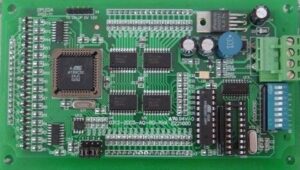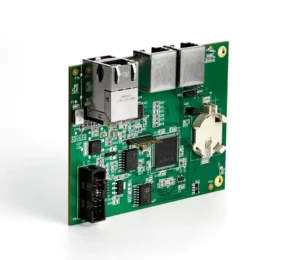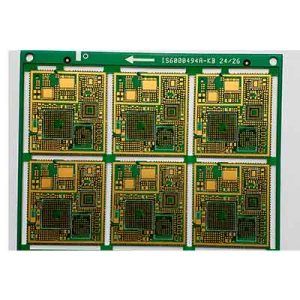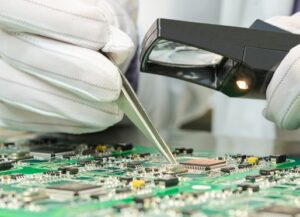
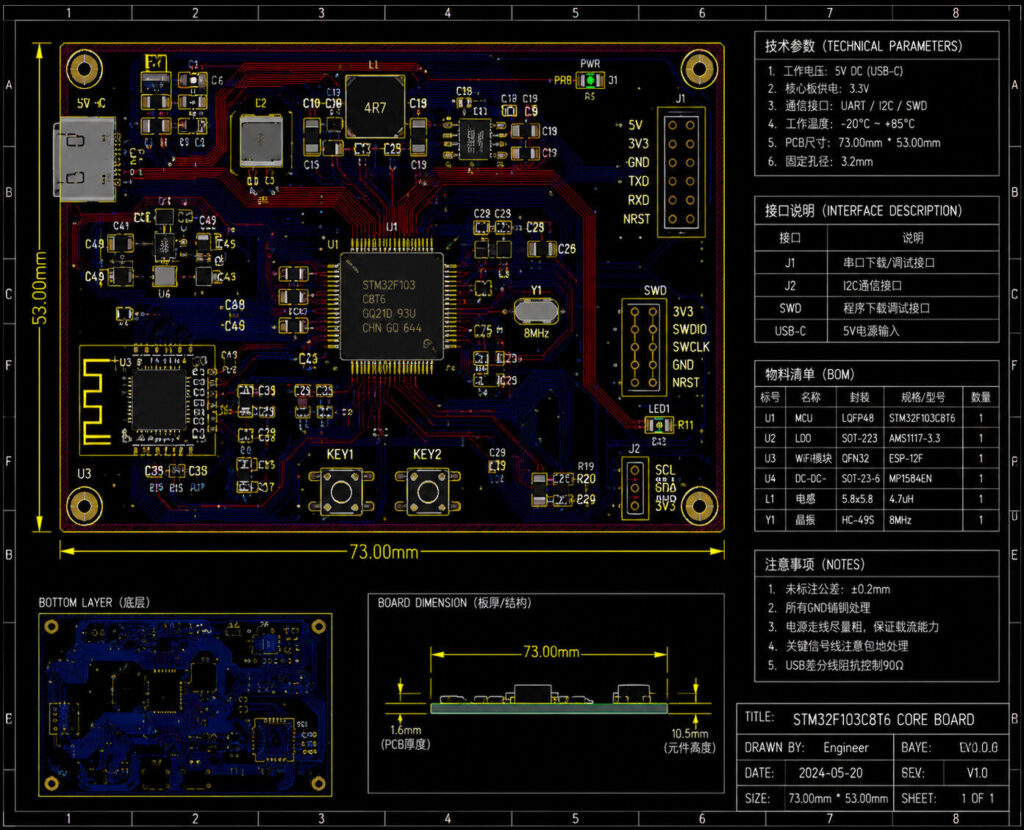
Many beginners think embedded hardware is simply choosing a chip, drawing a schematic, and making a PCB prototype.
But after working on a few real projects, you will realize that the hardest part of hardware development is not making the board power on once. The real challenge is making it work reliably for a long time.
The biggest difficulty of embedded hardware is that it is not as easy to modify as software.
If software has a problem, you can change the code, reflash it, and test again. But if the hardware design has a problem, you may need to revise the PCB.
A board revision is not just the cost of PCB prototyping. It can also affect the enclosure, purchasing, SMT assembly, testing, and delivery schedule.
Many projects fail because of small details.
For example, the power supply has no enough margin. It works during prototype testing, but resets under high temperature or heavy load.
The interface protection is not enough. Once the customer plugs and unplugs the device in the field, static electricity damages the chip.
The crystal area is routed poorly, causing occasional startup failures.
The copper under a wireless module is not handled properly, and the communication distance becomes poor.
The PCB prototype works, but once it enters mass production, the soldering yield drops.
This is the reality of embedded hardware:
Problems may not appear immediately, but if they are not considered early, they will cost you later.
Embedded hardware is also difficult because it must balance function, cost, stability, and production at the same time.
Customers want more functions.
Bosses want lower cost.
Engineers need to ensure stability.
Factories need to produce it smoothly.
The position of a component, the routing of a trace, or the value of a capacitor may all affect the final result.
For industrial control, automotive electronics, medical devices, and communication equipment, the requirements are even higher.
It is not enough for the board to simply run. It also needs anti-interference performance, high and low temperature resistance, long-term stability, and traceable test data.
Some problems cannot be found in the office. They only appear at the customer’s site.
That is why professional hardware development is not just about drawing a PCB.
In the early stage, you need to check whether the solution can actually be implemented.
In the middle stage, you need to check whether the PCB design has hidden risks.
In the later stage, you need to complete prototyping, SMT assembly, testing, and revision.
Before mass production, you also need to consider yield, supply chain, test fixtures, and consistency.
Many people think hardware engineers do not have much pressure. But in reality, hardware engineers are most afraid of field problems.
Once the product reaches the customer and issues like instability, rebooting, communication failure, overheating, or chip damage appear, the engineer must check power, software, PCB, components, soldering, and environment together.
This is why embedded hardware is not just MCU development.
It is the foundation of the whole product.
In one sentence:
Embedded hardware is difficult not because drawing a PCB is hard, but because the solution must be stable, the risks must be avoided early, and the product must truly be manufacturable, testable, and ready for mass production.