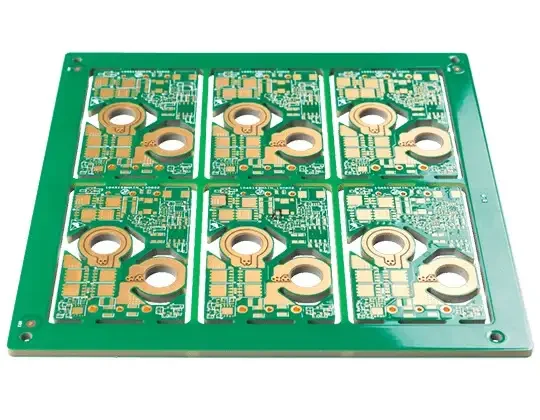
1. The Price Increase of Kingboard Materials Affects More Than Just PCB Factories
Recently, one of the most discussed topics in the PCB industry has been the price increase of Kingboard PCB materials.
When many customers hear that PCB prices are going up, their first reaction is often: “Are PCB manufacturers simply increasing their profit?”
But anyone familiar with PCB manufacturing knows that PCB pricing is not decided by the PCB factory alone. Behind the cost of a PCB is an entire material supply chain.
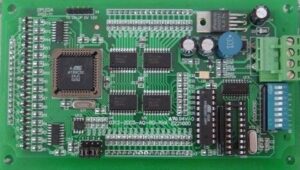
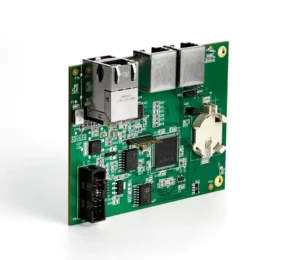
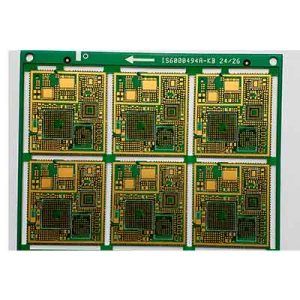
A PCB may look like just a green, blue, or black circuit board, but it involves many cost factors, including copper-clad laminate, prepreg, copper foil, solder mask ink, chemicals, drilling, electroplating, lamination, solder mask, silkscreen, surface treatment, labor, equipment depreciation, and electricity.
Among these, copper-clad laminate is one of the most important base materials in PCB manufacturing. As Kingboard is a major supplier of copper-clad laminate in the industry, once its material prices increase, the purchasing cost for downstream PCB factories will also rise.
This impact is especially obvious for multilayer PCBs, high-TG boards, thick copper boards, impedance-controlled boards, and high-frequency/high-speed boards, because these products rely more heavily on material stability.
Therefore, the recent Kingboard material price increase is not simply a price adjustment made by one PCB manufacturer. It is the result of upstream raw material cost changes being passed down to the PCB manufacturing process.
2. Why Are PCB Materials Increasing in Price?
PCB material price increases are usually not caused by a single factor. They are often the result of multiple factors combined.
The first factor is copper price fluctuation. Copper foil is an essential part of copper-clad laminate. Its price is affected by global copper prices, processing fees, production capacity, and market demand. When copper prices rise, the cost of copper foil increases, which can directly push up the price of copper-clad laminate.
The second factor is the rising cost of glass fiber cloth and resin. FR-4 material is not simply a piece of copper. It is a composite material made by laminating glass fiber cloth, resin, and copper foil. When the price of glass fiber cloth and resin rises, the cost of PCB base materials also increases.
The third factor is the growing demand for high-end PCBs. AI servers, communication equipment, new energy vehicles, industrial control, medical devices, and other industries are demanding more high-layer-count, high-frequency, high-speed, and high-reliability PCBs. These products require more stable materials, and the room for substitution with ordinary materials is limited. When high-end material supply becomes tight, prices tend to rise.
The fourth factor is the supply chain cycle. After material manufacturers adjust prices, PCB factories cannot immediately absorb the cost. For projects that are being quoted, sampled, or mass-produced, once material prices change, the original quotation validity period may also be affected. This is why many PCB quotations include a validity period, because material prices can change at any time.
3. Which PCB Products Are Most Affected?
After the price increase of Kingboard materials, not all PCB prices will rise by the same percentage. Different types of PCBs are affected differently.
Ordinary double-sided boards are relatively less affected. For example, standard FR-4, 1.6 mm thickness, 1 oz copper, green solder mask, white silkscreen, and HASL surface treatment are common PCB specifications. If the size is small and the process is simple, the overall price impact is usually manageable.
Multilayer boards are more affected. Four-layer, six-layer, eight-layer, and higher-layer PCBs require more cores and prepregs, and the lamination structure is more complex. The more layers there are, the more materials are used, so material price increases have a more obvious impact.
High-TG boards are also affected. Industrial control, power supply, automotive electronics, and medical equipment often require high-TG materials to improve heat resistance and long-term stability. Since high-TG materials are already more expensive, upstream price increases are reflected more directly.
Impedance-controlled and high-speed boards are affected even more. High-speed signal boards involving USB, HDMI, Ethernet, DDR, LVDS, RF, and similar interfaces have strict requirements for dielectric constant, dielectric thickness, copper thickness, stack-up structure, and line width/spacing. Cheaper materials cannot be substituted casually, otherwise impedance values may deviate and signal integrity may be affected.
Thick copper boards and high-current boards are also sensitive to price changes. The thicker the copper, the more copper is used. When copper prices or copper foil processing fees rise, the price pressure on 2 oz, 3 oz, or even thicker copper power boards, charging pile boards, and industrial control boards becomes more obvious.
4. Why Can’t We Simply Switch to Cheaper Materials?
Some customers may ask: “If Kingboard materials have become more expensive, can we switch to a cheaper material?”
This question cannot be answered simply with yes or no. It depends on the application of the PCB.
For ordinary low-voltage, low-speed, and non-critical products, if the customer has no special material requirements, suitable alternative materials may be considered after engineering confirmation.
But for industrial control, medical, power supply, automotive, communication, and high-speed signal products, materials cannot be changed casually just to save a small amount of cost.
PCB material affects more than price. It directly affects product stability.
For example, under high-temperature environments, ordinary materials may deform, delaminate, or blister more easily.
If a high-speed signal board uses material with an unstable dielectric constant, the impedance may shift.
For high-current boards, if copper thickness or lamination reliability is insufficient, overheating or via failure may occur.
If prototype boards and mass production boards use different materials, the prototype may pass testing, but mass production may become unstable.
Therefore, professional PCB manufacturing cannot focus only on whether the price is low. It must also confirm whether the material meets the project requirements.
This is especially important for old equipment PCB reproduction, imported equipment board replacement, and industrial control board prototyping. If the original board used specific or high-reliability materials, the reproduction process must carefully confirm the material. If the wrong material is used, the board may look similar, but its long-term performance may be completely different.
5. Why Is PCB Quotation Becoming Harder to Provide Instantly?
After PCB material prices increase, many customers find that PCB quotations are no longer as simple as before.
In the past, for some ordinary double-sided boards, customers could provide the size, layer count, and quantity, and the factory could quickly give an estimated price.
But now, many projects, especially PCBA projects involving BOM, assembly, testing, impedance control, or special processes, can no longer be quoted based only on board area.
There are too many factors that affect the final price:
What is the material brand?
What is the board thickness?
What is the copper thickness?
Is there a TG requirement?
Is impedance control required?
Are blind or buried vias involved?
Is the surface finish ENIG, OSP, or HASL?
Is SMT assembly required?
Are there BGA, QFN, or fine-pitch components?
Is functional testing required?
Is long-term mass production required?
If this information is not confirmed, quoting too low may lead to losses later, while quoting too high may make customers feel the price is unreasonable.
Therefore, after material prices rise, PCB quotation will increasingly depend on complete project information. The more complete the Gerber files, BOM, coordinate files, process requirements, and test requirements are, the more accurate the quotation will be.
If a customer only sends a picture and asks, “How much is this board?”, in many cases only a preliminary evaluation can be given, not a final price.
6. How Should Customers Respond to PCB Material Price Increases?
Facing the price increase of Kingboard materials and fluctuations in PCB material costs, customers should not simply focus on lowering the price. Instead, they should plan ahead.
First, confirm material requirements before prototyping.
If the product requires long-term operation, high-temperature resistance, high-current capability, high-speed signals, or industrial field application, it is better to define the material grade during the design stage instead of changing it later.
Second, lock in material and quotation cycles for mass production projects.
If the project has already entered mass production, customers should confirm material inventory, delivery time, and quotation validity with the supplier in advance to avoid unexpected price changes affecting delivery.
Third, old board reproduction projects should start with documentation recovery and material evaluation.
Many old equipment boards have no Gerber files, no BOM, and no schematic. Only one physical board remains. These projects cannot be quoted as ordinary PCB orders. The layer count, material, copper thickness, surface treatment, and component situation must be evaluated first.
Fourth, do not only look for the lowest price.
When material prices increase, there will always be quotations that are significantly lower than normal market cost. A low price does not always mean there is a problem, but if the price is far below normal cost, customers should be alert to possible material substitution, process simplification, or reduced testing standards.
Fifth, choose a supplier who can clearly explain the material and process.
A reliable PCB supplier will not only give you a price. They will also explain what material, process, delivery time, and testing standard the price is based on.
7. Conclusion
The price increase of Kingboard materials is only one example of rising material costs in the PCB industry.
Behind PCB price changes are copper foil, glass fiber cloth, resin, prepreg, copper-clad laminate, labor, electricity, and downstream market demand.
For ordinary PCBs, price increases may only mean a change in unit cost. But for industrial control, medical, automotive, communication, and high-speed signal boards, material changes directly affect product stability.
Customers should not only pay attention to how much the price has increased. More importantly, they should consider whether their project can be prototyped, mass-produced, and reproduced stably.
A PCB is not just a simple green board.
Only when the right material is selected can the project have a stable foundation.
Saving money in the wrong place may lead to much higher costs later.