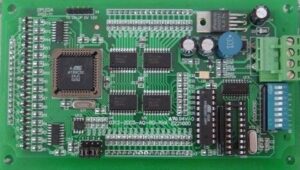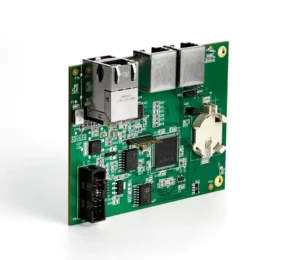
Many electronic products remain in operation far longer than their original design teams expected. Industrial machines, medical equipment, communication systems, power supplies, and control devices may continue working for ten, fifteen, or even twenty years. During that time, original PCB files may be lost, suppliers may stop providing support, components may become obsolete, and technical documentation may no longer match the actual hardware.
When a circuit board fails, the main challenge is often not the damaged component itself. The real problem is that engineers may only have the physical board, with no schematic, PCB design file, Bill of Materials, or manufacturing documentation. Without these files, maintenance becomes slower, troubleshooting becomes more difficult, and even a simple repair may require a large amount of manual analysis.
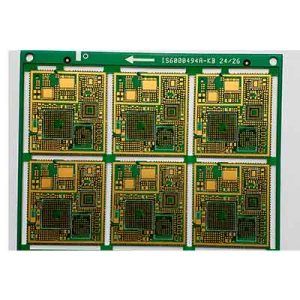
PCB reverse engineering helps recover the engineering information behind an existing circuit board. It is not simply a matter of redrawing visible traces. Engineers need to understand the power structure, grounding system, signal flow, component relationships, interface connections, layer stack-up, and the overall function of the circuit. For multilayer boards, internal traces, power planes, blind vias, buried vias, and BGA routing make the process even more complex.
A recovered PCB layout shows the physical structure of the board, but the schematic provides a clearer understanding of how the circuit works. This is especially important for future maintenance, fault diagnosis, component replacement, design improvement, and product upgrades. A readable and editable schematic allows engineers to study the circuit more efficiently instead of repeatedly tracing connections from the physical board.
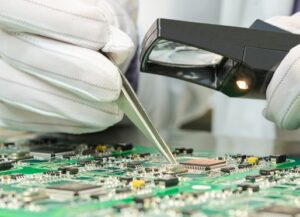
The Bill of Materials is another important part of documentation recovery. Identifying components can be difficult when markings are damaged, removed, unclear, or no longer searchable. In these situations, engineers must combine package information, pin connections, circuit position, surrounding components, and functional analysis to determine the most likely part number or suitable replacement.
For rare, expensive, or irreplaceable circuit boards, non-destructive analysis is becoming increasingly valuable. The original sample may still be required for equipment operation, testing, or future reference, so physically damaging the board may not be acceptable. Non-destructive PCB reverse engineering allows engineers to study the board structure while preserving the original sample as much as possible.
This approach is particularly useful for industrial control boards, medical electronics, transportation systems, imported equipment, automation systems, and other products with long service lives. In many of these applications, replacing the entire machine is far more expensive than recovering the technical documentation of a single circuit board.
PCB reverse engineering also plays an important role in product lifecycle management. Once the PCB layout, schematic, and BOM have been recovered, companies can maintain old equipment, rebuild spare boards, replace obsolete components, transfer production, improve weak circuit sections, and create their own technical archives. This reduces dependence on a single supplier and gives the company greater control over future maintenance and production.
Accuracy is more important than simply completing the work quickly. A small error in a via connection, power net, component value, package, or signal path may cause startup failure, unstable communication, overheating, incorrect voltage levels, or intermittent faults. For this reason, the recovered PCB file, schematic, BOM, and physical sample must be carefully compared and verified.
As more electronic systems remain in use beyond their original support period, PCB reverse engineering is becoming an increasingly important engineering tool. Its value is not limited to recreating a circuit board. The real purpose is to recover the technical knowledge behind the hardware, restore missing documentation, reduce maintenance risks, and extend the service life of valuable electronic equipment.