
What Is Turnkey PCB Assembly?
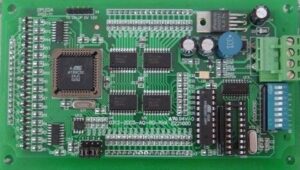
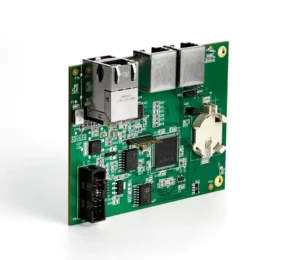
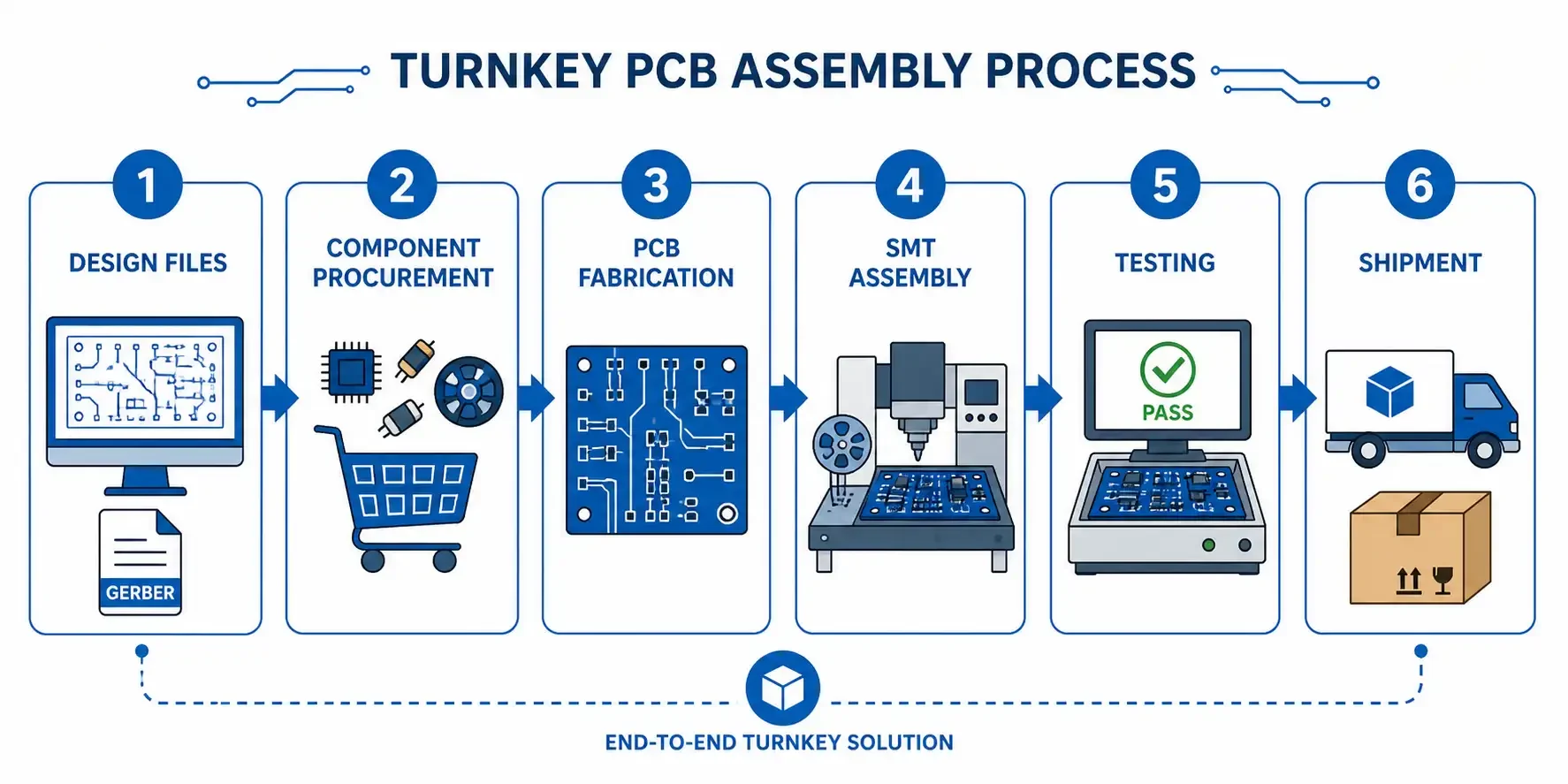
Turnkey PCB assembly is a service model where your assembly partner manages the complete production process from start to finish. You provide the design files—typically Gerber files, a bill of materials (BOM), and a centroid file—and the provider handles everything else. This includes procuring all components, manufacturing the bare PCBs, performing surface mount (SMT) and through-hole (THT) assembly, conducting inspections and testing, and preparing the finished product for shipment.
The defining characteristic of turnkey assembly is the single point of contact. Rather than coordinating with separate vendors for PCB fabrication, component distributors, and assembly houses, you communicate with one team throughout the project. This streamlines decision-making, reduces miscommunication risks, and simplifies quality escalation when issues arise.
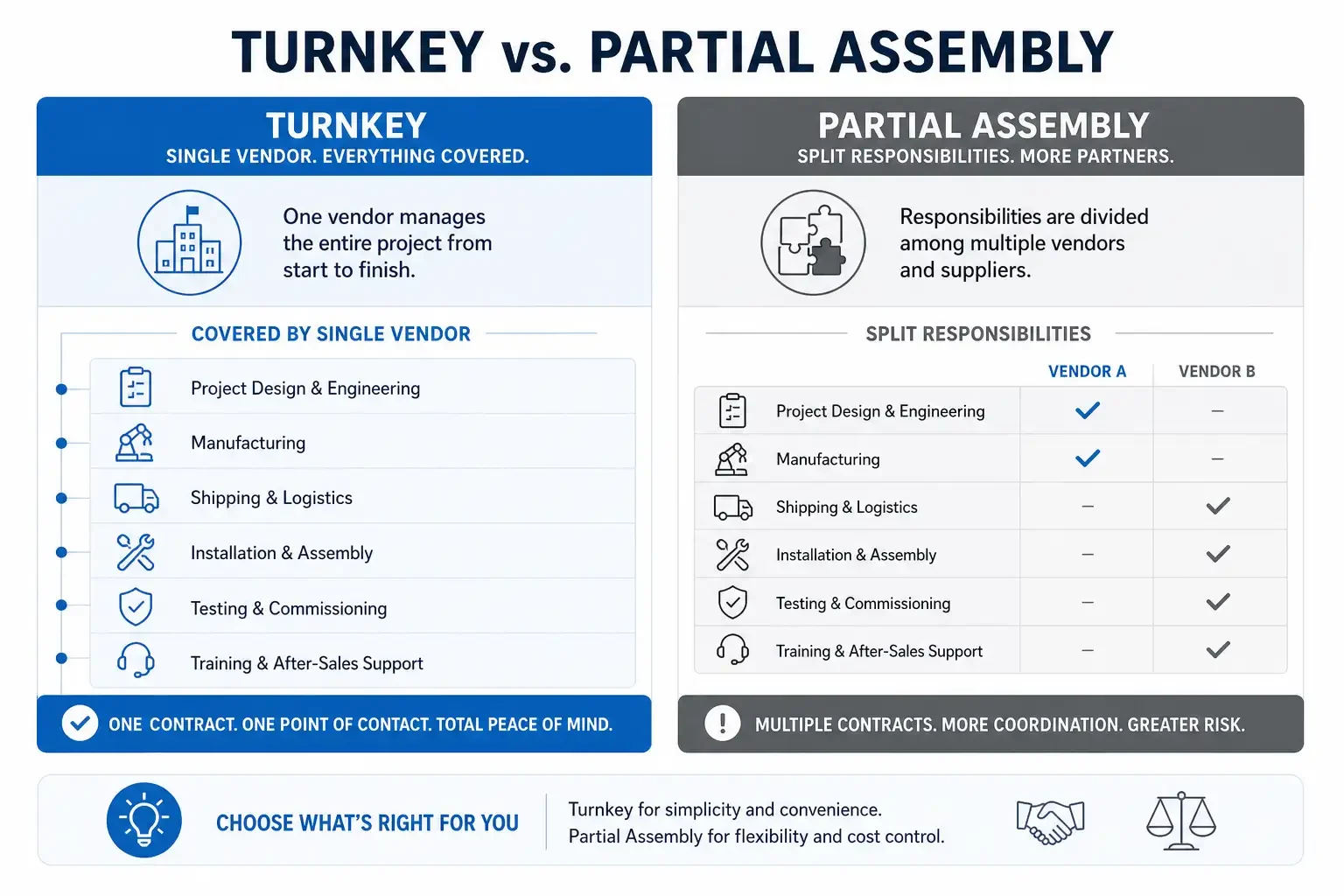
Turnkey assembly contrasts with consigned or partial assembly models where you supply components or manage certain aspects yourself. In those scenarios, you accept more control but also more responsibility for supply chain management, inventory risk, and coordination overhead.
For startups and engineers without dedicated procurement teams, turnkey assembly eliminates the need to maintain relationships with multiple component distributors or understand the complexities of electronics supply chains. Your assembly partner brings established vendor relationships, volume purchasing power, and expertise in navigating component availability challenges.
What’s Included in Turnkey PCB Assembly
Turnkey PCB assembly encompasses the full spectrum of electronics manufacturing services, though specific inclusions vary by provider. Understanding what is typically covered helps you evaluate quotes accurately and avoid surprises.
PCB Manufacturing
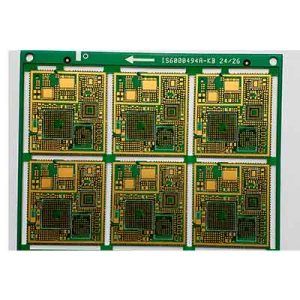
The provider fabricates your printed circuit boards to your specifications. This includes base material selection, copper weight, layer count, surface finish, and any special requirements like controlled impedance or blind/buried vias. Quality follows IPC standards, typically IPC-6012 for rigid boards or IPC-6013 for flexible boards.
Component Sourcing and Procurement
The provider sources all components listed in your BOM. This includes establishing relationships with authorized distributors, verifying manufacturer part numbers, checking lifecycle status, and managing purchase orders. Turnkey providers typically have accounts with major distributors like DigiKey, Mouser, and Arrow, enabling competitive pricing through volume purchasing.
SMT Assembly
Surface mount technology assembly places components onto the PCB using pick-and-place equipment. The provider uses your centroid file to determine exact placement coordinates and orientations. Reflow soldering secures components to the board according to thermal profiles appropriate for the components and board materials.
THT Assembly
Through-hole technology assembly inserts components with wire leads into plated holes and solders them, typically using wave soldering or selective soldering processes. This is used for connectors, transformers, and components unsuitable for surface mounting.
Inspection and Testing
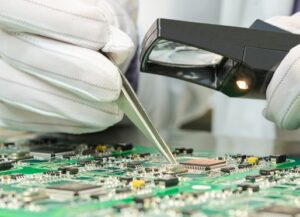
Quality verification includes automated optical inspection (AOI) to check for component placement errors, solder defects, and other assembly issues. Depending on your requirements, additional testing like in-circuit testing (ICT), functional testing, or X-ray inspection for BGAs may be included or available as add-ons.
Packaging and Shipment
Finished assemblies are cleaned, inspected, and packaged for shipment. Some providers include conformal coating or potted assemblies if specified.
Benefits of Turnkey PCB Assembly
Choosing turnkey PCB assembly offers several advantages that can significantly impact your project’s success and your team’s productivity.
Single Point of Contact
Perhaps the most valuable benefit is simplified communication. One team understands your entire project—from component choices to board characteristics to assembly requirements. When questions arise, you have one number to call. This reduces coordination overhead and accelerates issue resolution.
Time Savings
Component procurement is notoriously time-consuming. Researching distributors, verifying availability, placing orders, and tracking shipments can consume weeks of engineering time. Turnkey providers streamline this process through established procurement channels, often sourcing components in days that would take individual engineers weeks to secure.
Cost Efficiency
While turnkey assembly adds a markup on components (typically 5-15%), the total cost often undercuts managing procurement independently. Providers leverage volume purchasing to secure better distributor pricing. They also eliminate your inventory carrying costs, obsolescence risk, and procurement administrative overhead.
Reduced Supply Chain Risk
Component shortages and obsolescence are ongoing challenges. Turnkey providers maintain relationships with multiple distributors and track component lifecycle status. They can identify potential shortages early and suggest alternatives before they derail your production schedule. When shortages occur, their purchasing volume and distributor relationships often secure allocations unavailable to individual buyers.
Quality Consistency
One provider controls the entire process. If your PCB manufacturer produces boards with problems, the assembly team addresses them directly. There is no finger-pointing between vendors when issues arise. This integrated approach promotes accountability and consistent quality standards.
No Inventory Management
Turnkey assembly eliminates the need to warehouse components. You pay for components when they are used in production, not months in advance. This improves cash flow and eliminates the risk of components becoming obsolete while in storage.
What You Need to Provide for Turnkey Assembly
Successful turnkey projects start with complete and accurate documentation. Understanding what to provide—and how to format it—accelerates quoting and production.
Gerber Files
These are the manufacturing files that define your PCB. The Gerber format includes layers for copper traces, solder mask, silkscreen, and paste stencil. You will need a complete set including the drill file (Excellon format) that defines holes and vias. Most providers require RS-274X (extended Gerber) format.
Bill of Materials (BOM)
Your BOM lists every component on the board. A turnkey-friendly BOM includes reference designators (U1, R1, C5, etc.), manufacturer part numbers (not just values like “10K”), quantities per board, and manufacturer names. Including alternate or equivalent part numbers gives the provider flexibility if your first choice is unavailable. Your BOM should be in CSV or Excel format for easy processing.
Centroid File (XY Data)
This file specifies the X/Y coordinates and rotation angle for each component, telling the pick-and-place machine where to place each part. The file should correspond exactly to your BOM—same reference designators, same quantities. Most providers accept IPC-356 or similar formats.
Assembly Drawings
If your board has unusual assembly requirements, specialized components, or critical placement tolerances, include an assembly drawing. This might show component orientation requirements, critical dimensions, or special instructions not apparent from the design files.
Quality and Test Specifications
For specialized requirements, provide any applicable quality standards, test procedures, or acceptance criteria. This might include requirements for X-ray inspection of BGA packages, specific functional test procedures, or conformance to industry standards beyond basic IPC requirements.
Turnkey vs Partial Assembly: A Quick Comparison
When evaluating assembly services, you will encounter several models. Understanding the differences helps you choose the right approach.
| Factor | Turnkey Assembly | Partial Assembly |
|---|---|---|
| Component Sourcing | Provider procures all parts | Customer supplies components |
| Component Ownership | Provider owns until assembly | Customer owns components |
| Inventory Risk | Provider bears risk | Customer bears risk |
| Markup | 5-15% on components | No component markup |
| Storage Costs | Included | Usually extra charge |
| Single Contact | Yes | May require multiple |
| Administrative Burden | Low | Higher |
| Flexibility | Provider manages changes | Customer controls sources |
Turnkey assembly suits teams wanting simplicity and single-vendor accountability. Partial assembly suits organizations with established component supply chains preferring direct control over purchasing.
Choosing a Turnkey PCB Assembly Provider
Selecting the right turnkey assembly partner affects your product quality, timeline, and stress level. Evaluate providers across several dimensions.
Capabilities and Capacity
Verify the provider can handle your specific requirements: board size, layer count, component types (fine-pitch BGAs, QFNs, etc.), testing capabilities, and volume capacity. Ask about their equipment—for instance, can they handle 0.3mm pitch BGAs or just larger components?
Quality Certifications
Look for relevant certifications: ISO 9001 for quality management, ISO 13485 for medical devices, or AS9100 for aerospace. These indicate systematic processes for maintaining quality. Ask about their IPC certification levels for assembly personnel.
Experience and Track Record
Request case studies or references in your industry or application type. A provider experienced with high-frequency RF boards may not be optimal for medical devices, and vice versa. Ask about their experience with similar volume levels.
Communication and Responsiveness
During initial inquiries, evaluate their communication quality. Do they respond promptly? Do they ask clarifying questions? Clear communication during quoting typically predicts smooth communication during production.
Pricing Transparency
Request detailed quotes showing component costs, markup percentages, setup charges, and any additional fees. Hidden costs surprise later. A trustworthy provider explains all charges upfront.
Questions to Ask Potential Providers
- What is your typical lead time for turnkey assembly?
- How do you handle component shortages or obsolescence?
- What testing do you include versus charge extra?
- Can I visit your facility?
- What happens if there are quality issues?
Typical Turnkey Assembly Process and Timeline
Understanding the turnkey process helps set realistic expectations and plan your project schedule.
Week 1: Quote and Documentation Review
Your provider reviews design files and BOM, verifies component availability, and generates a production quote. This typically takes 1-3 days for straightforward projects, longer if component verification requires research or alternative sourcing discussions.
Weeks 2-4: Component Procurement
After order confirmation and payment terms, the provider orders components. Standard components from major distributors arrive in 3-7 days. Long-lead items (transformers, connectors, custom parts) may take 4-8 weeks. PCB fabrication runs concurrently, typically 3-7 days for standard boards.
Weeks 3-4: Assembly
Once components and boards arrive, assembly begins. SMT assembly (pick-and-place and reflow) typically takes 1-2 days. THT assembly and any hand operations add time. AOI inspection follows assembly.
Week 4-5: Testing and Finishing
In-circuit testing, functional testing, or specialized testing proceeds. The provider performs any post-assembly operations: conformal coating, programming, or box-build if included.
Week 4-6: Shipment
Finished boards are packaged, labeled, and shipped. Expedited shipping gets boards to you faster but costs more.
Total Timeline
2-6 weeks typical, with component availability being the primary variable. Urgent projects may qualify for expedited services.
Common Mistakes to Avoid with Turnkey Assembly
Even experienced teams sometimes stumble. Avoiding these pitfalls improves your turnkey experience.
Incomplete or Inaccurate BOMs
A BOM with missing part numbers, incorrect manufacturer names, or wrong quantities causes quoting delays and production problems. Double-check every line before submitting for quote.
Not Verifying Component Availability
Assume nothing about component availability. A “simple” part may be on allocation or obsolete. Your provider checks this, but confirming critical component availability during design helps avoid surprises.
Ignoring Lead Times
Factor component lead times into your schedule. Ordering boards for an October trade show in September requires checking whether all components are available. Long-lead items may need to be ordered before final design validation.
Skipping DFM Review
Design for Manufacturability (DFM) review catches potential assembly issues before production. A good turnkey provider performs DFM analysis and flags problems like insufficient keep-out areas, questionable footprint patterns, or thermal relief issues. Ignoring these warnings leads to quality problems.
Unrealistic Cost Expectations
Turnkey adds cost over component list price because it includes procurement, handling, storage, and risk management. Comparing turnkey quotes solely on component cost misses the value provided. Evaluate total cost including your own procurement overhead if handling components independently.
Not Discussing Quality Requirements Upfront
If you need specific testing, conformal coating, or special handling, discuss these before quoting. Adding requirements mid-production causes delays and cost surprises.
Frequently Asked Questions
What is turnkey PCB assembly?
Turnkey PCB assembly is a complete service model where the assembly provider handles everything from component procurement to final testing. You provide the design files (Gerber, BOM, centroid), and the provider sources all components, manufactures the PCBs, performs assembly, and delivers finished boards. This single-vendor approach simplifies communication, reduces your supply chain burden, and transfers component procurement and inventory risk to the provider.
What files do I need for turnkey PCB assembly?
For turnkey PCB assembly, you typically need: (1) Gerber files for PCB manufacturing, (2) Bill of Materials (BOM) with manufacturer part numbers, (3) Centroid/XY file for SMT component placement, and (4) Assembly drawings for any special instructions. Your BOM should include reference designators, quantities, manufacturer part numbers, and any alternate parts acceptable. Accurate documentation ensures accurate quotes and faster production.
How long does turnkey assembly take?
Turnkey PCB assembly typically takes 2-6 weeks from order confirmation to delivery, depending on component availability. Standard components add 1-2 weeks, while long-lead or custom parts can extend this to 4-6 weeks. PCB fabrication takes 3-7 days, assembly takes 1-3 days, and testing adds 1-2 days. Expedited services may reduce timelines but typically incur additional fees. Always confirm lead times during quoting.
What are the main benefits of turnkey assembly?
Turnkey PCB assembly offers several key benefits: (1) Single point of contact simplifies communication and project management, (2) Time savings since you don’t manage multiple vendors or procurement, (3) Cost efficiency through provider volume purchasing power, (4) Reduced risk of component shortages or obsolescence, (5) Quality consistency since one provider controls the entire process, and (6) No inventory management required since the provider handles component storage.
How does turnkey differ from partial assembly?
Turnkey assembly means the provider handles everything including component procurement, while partial assembly (consigned) means you supply your own components. In turnkey, you provide design files and the provider manages the rest. In consigned assembly, you own the components and manage your supply chain, but the assembly provider may charge additional fees for handling and storage. Turnkey reduces your administrative burden; consigned gives you more control over components and pricing.
What components can turnkey providers source?
Turnkey providers can source most standard components including ICs, resistors, capacitors, connectors, and inductors from major distributors. However, some components may have restrictions: (1) Long-lead time parts may extend production schedules, (2) Some obsolete or NRND (not recommended for new designs) parts may be unavailable, (3) Custom or proprietary components require customer supply, and (4) High-demand parts may have allocation issues. Discuss component availability during the quoting process.
References
- Global Electronics Association (formerly IPC). IPC-A-610 Acceptability of Electronic Assemblies.
https://electronics.org/ipc-standards - IPC. J-STD-001 Requirements for Soldered Electrical and Electronic Assemblies.
https://electronics.org/ - SMTA (Surface Mount Technology Association). Electronics Assembly Training and Certification.
https://smta.org/
Further Reading
- Turnkey vs Consigned PCB Assembly | Comparing assembly service models to choose the right approach for your project
- Prototype PCB Assembly Files | Complete guide to documentation required for assembly quotes
- PCB Assembly Cost | Understanding factors that affect assembly pricing
CtrlCpcb – PCB Prototype & PCB Fabrication Manufacturer | Last updated: 2026-08-08
This article provides general information about turnkey PCB assembly services. Specific capabilities, pricing, and timelines vary by provider. Contact your assembly partner for detailed information about your specific requirements.