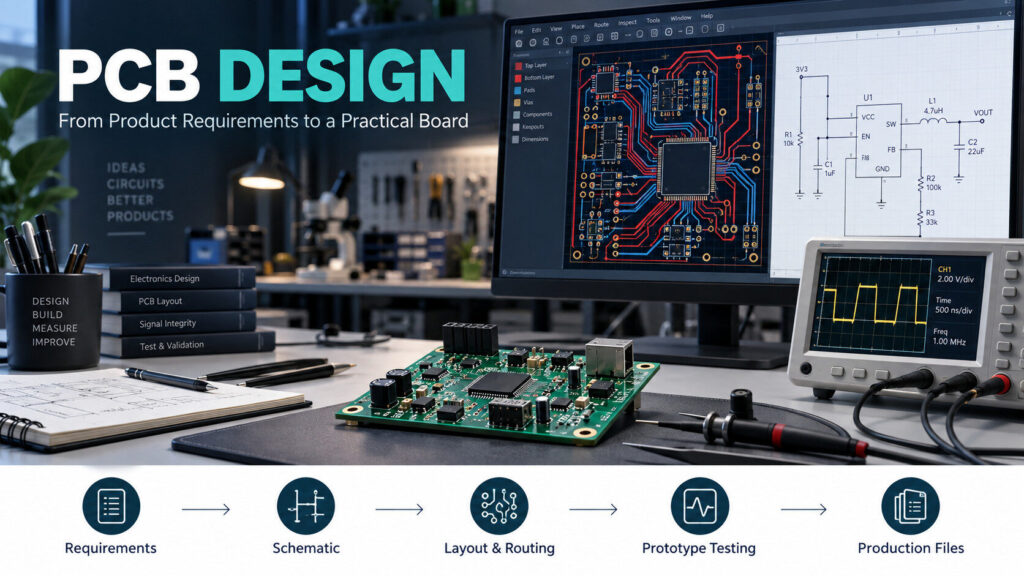
PCB design connects a product idea with a physical electronic system. A successful design must satisfy electrical requirements while fitting the enclosure, supporting manufacturing, and staying within the project budget.
That process begins before the first trace is drawn.
Define the Requirements
The designer needs to understand what the product must do, how it will be powered, and where it will operate.
Board dimensions, connector positions, mounting holes, expected loads, and communication interfaces should be established early. Clear requirements reduce the risk of major changes after layout is complete.
Develop the Schematic
The schematic describes how the circuit works and how its components connect.
Component selection should consider performance, availability, cost, and operating conditions. Protection features and access for programming or testing also deserve attention during this stage.
Reviewing the schematic before layout helps catch problems while they are easier to correct.
Plan Placement and Routing
Component placement influences routing, heat management, assembly, and maintenance.
Power circuits, sensitive signals, and external interfaces have different needs. Good placement accounts for these relationships and creates sensible paths for both signals and their return currents.
Routing then turns the planned connections into physical copper traces. Design rules should reflect the electrical requirements and the capabilities of the intended PCB manufacturer.
Verify with a Prototype
Software checks are useful, but they do not replace testing a physical board.
A prototype allows the team to measure key behavior, confirm mechanical fit, and evaluate operation under expected conditions. Findings should be recorded and reflected in the next design revision.
Prepare for Repeatable Production
The final handoff should include consistent, clearly identified manufacturing and assembly files.
Good PCB design is a process of defining, designing, reviewing, and verifying. A board is ready for production when evidence shows that it meets the product’s requirements—not merely when the layout is finished.