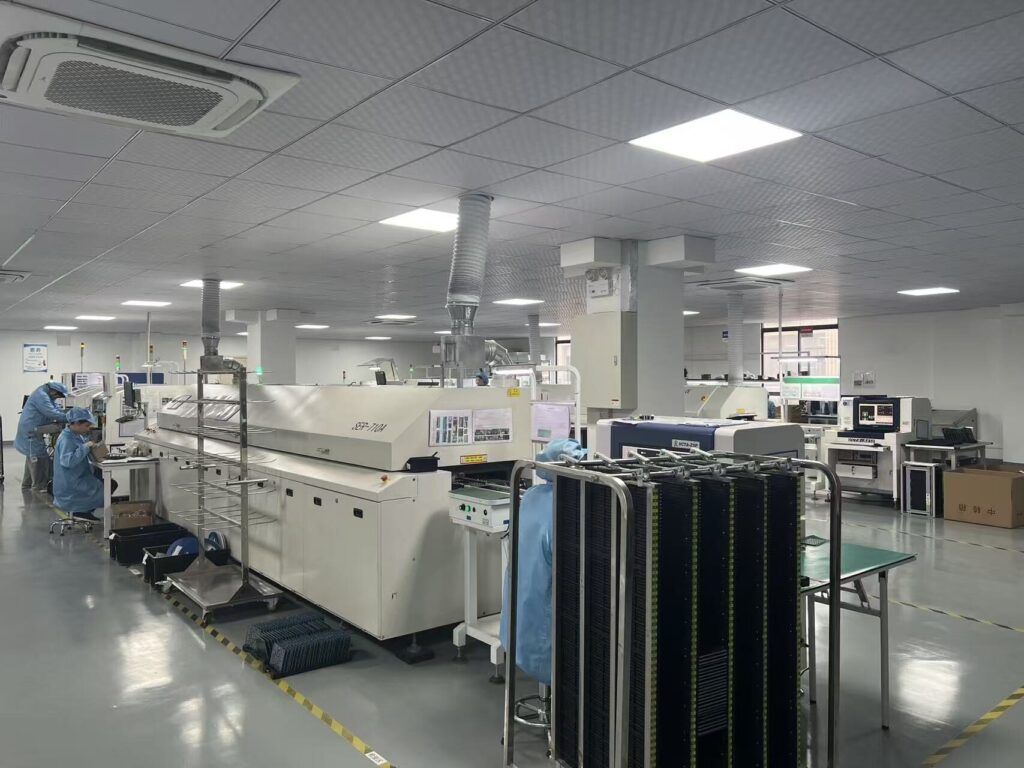
From Small-Batch Trial Production to Mass Production: How an SMT Factory Improves Delivery Efficiency
Before electronic products enter mass production, they usually go through several stages, including prototype validation, small-batch trial production, and batch production. At the early stage, the quantity may only be a few pieces or dozens of pieces for function testing and system verification. After the product becomes stable, the order quantity may gradually increase to hundreds, thousands, or even more.
During this process, an SMT assembly supplier does more than complete one production order. More importantly, the factory needs to support the customer from the prototype stage to later batch production.
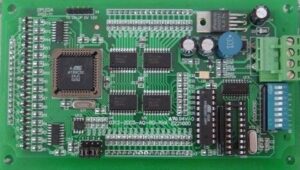
We once handled an industrial control PCBA project. At the beginning, the customer only needed a small batch of samples for firmware debugging and equipment testing. When the customer first provided the production files, some component models in the BOM still needed to be confirmed, and several positions in the pick-and-place file also required engineering review.
This situation is common during the prototype stage. Since the product is still being verified, the production data may continue to change. If the factory simply follows the files without checking them first, problems may only be found after assembly, leading to rework and delivery delays.
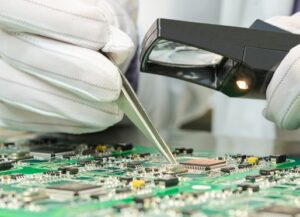
After receiving the files, our engineering team reviewed the PCB data, BOM list, pick-and-place file, component polarity, and package information. For any unclear points, we confirmed them with the customer before arranging production. After confirmation, we proceeded with stencil preparation, SMT program setup, material checking, and production scheduling.
After the first batch of samples was completed, the customer used them for functional testing and made a small revision based on the test results. During the second production run, because we had already recorded the component directions, material alternatives, and soldering notes from the first batch, the preparation process became much more efficient, and communication time was reduced.
Later, this project gradually moved from small-batch trial production to batch production. Since the prototype and trial production stages were handled by the same factory, the issues confirmed in the early stage could be carried forward into batch production. This helped avoid repeated communication and repeated mistakes.
This is one of the practical advantages of having our own SMT factory.
Issues found during the prototype stage can continue to be followed up during batch production.
Updated customer files can be quickly compared by the engineering team.
Production details can be directly fed back by the SMT line.
Follow-up orders or repeat batches can be arranged more efficiently based on existing production records.
Small-batch SMT production and large-batch SMT production have different priorities. Small-batch samples focus more on response speed and verification efficiency, because customers need the boards quickly for testing. Batch production focuses more on delivery stability, soldering consistency, and overall yield. If a factory can only handle samples, it may not be able to support later batch production. If a factory only focuses on large orders, it may not be flexible enough to support the customer’s early development stage.
Our factory can support different stages of SMT assembly, including prototype assembly, small-batch trial production, medium-volume production, and batch PCBA manufacturing. Depending on customer requirements, we can also provide PCB fabrication, component sourcing, SMT assembly, DIP insertion, manual soldering, and functional testing.
In actual production, we arrange the process according to order quantity, material readiness, process difficulty, and delivery requirements. For small-batch orders, the focus is on fast response and helping customers complete product validation as soon as possible. For batch orders, the focus is on production planning, delivery efficiency, and product consistency.
The lead time of many SMT orders is not determined only by the placement speed of the machines. It depends on the whole process: whether the production files are reviewed in advance, whether the materials are confirmed on time, whether the production line is scheduled properly, and whether inspection follows up efficiently.
For customers, if one factory can continuously support the project from prototype to batch production, the whole process becomes smoother. Early-stage issues are less likely to be lost, and follow-up orders can enter production more quickly.
SMT assembly is not simply placing components onto a PCB. It connects design files, materials, production, inspection, and delivery. A factory that can respond quickly to small-batch orders and also support stable batch production can better support customers throughout the product development and manufacturing process.