What Can You Do When an Old Equipment PCB Is Discontinued?
Many factories do not have a machine problem.
They have a spare parts problem.
The equipment was expensive when purchased.
It has been running for more than ten years.
The main structure is still stable.
The function still meets production needs.
But one day, the PCB fails.
The control board is discontinued.
The power board is no longer available.
The communication board has no drawings.
The driver board uses obsolete components.
The original supplier gives a high repair price.
Replacing the whole machine is too expensive.
In this situation, customers need more than a simple repair.
They need a long-term replacement board solution.
This is where our PCB documentation recovery, PCBA repair, replacement development, and one-stop production services provide real value.
1. What Problems Do Customers Face When Old Equipment Boards Are Discontinued?
The most common problem with old equipment is not that the machine cannot work.
The real problem is that maintenance support has stopped.
The original manufacturer may no longer provide service.
The distributor may no longer supply spare boards.
The original design data may be lost.
Key components may be obsolete.
The fault may be difficult to locate.
The delivery time may be too long.
The unit price may be too high.
The customer may have no spare board inventory.
For industrial control systems, automation lines, medical equipment, power equipment, and test instruments, one failed board can stop the whole machine.
Without a replacement solution, the customer can only wait, accept high prices, and suffer downtime.
Our job is to turn this passive situation into a controllable engineering solution.
2. Starting from Repair, But Not Stopping at Repair
Many customers first contact us because a board has failed and they want to repair it.
But after communication, we often find that the real need has three levels.
First: repair the failed board.
Second: rebuild the technical documentation for future maintenance.
Third: develop a replacement board or spare board solution to avoid future supply problems.
That is why we do not recommend simple repair for every project.
If the equipment is low value or the board will only be used once, repair may be enough.
But if the customer has multiple machines, long-term maintenance needs, or discontinued original boards, then repairing one board does not solve the real problem.
A better approach is:
Inspect and repair first;
Recover PCB and BOM data;
Produce and verify samples;
Then build a spare board or replacement production plan.
This way, if the same problem happens again, the customer does not need to start from zero.
3. When Is Replacement Board Development Worth Considering?
Not every old PCB is suitable for replacement production.
But the following situations are worth evaluating.
The Original Board Is Discontinued
The equipment still works, but the spare board cannot be purchased anymore.
The Original Repair Price Is Too High
If the original board is expensive and the customer may need more boards later, a replacement solution can reduce long-term cost.
The Customer Has Multiple Machines
If the same board is used in several machines, building spare boards becomes more valuable.
The Board Fails Frequently
Power boards, driver boards, and control boards may fail after years of operation. Spare boards can reduce downtime risk.
The Customer Needs Local or Alternative Supply
Some imported components are hard to buy, expensive, or have long lead times. Component replacement can be evaluated through testing.
The Original Technical Files Are Missing
If the customer only has the physical board but no drawings, BOM, Gerber, or schematic, technical data must be rebuilt from the board.
4. Our Process
For old equipment PCB projects, we usually do not quote production directly at the beginning.
We start with engineering evaluation.
Step 1: Original Board Inspection and Repair Evaluation
We check whether the board has visible damage and inspect key areas such as power input, protection circuits, power devices, capacitors, resistors, connectors, and main control ICs.
If repair is possible, we evaluate the repair plan.
If repair is not enough, or if the customer needs long-term spare boards, we move to the next step.
Step 2: PCB Documentation Recovery
We recover PCB layout files, Gerber files, drilling files, assembly drawings, and placement files from the physical board.
For multilayer PCBs, we also analyze stack-up, internal connections, vias, and key signal paths.
Step 3: BOM Reconstruction and Component Verification
We identify component models, packages, values, brands, quantities, and reference designators.
For obsolete, sanded, unknown, or hard-to-source components, we evaluate replacement options separately.
BOM reconstruction is very important.
If one component model is wrong, PCB manufacturing, SMT assembly, and functional testing may all be affected.
Step 4: Schematic and Key Circuit Analysis
For old equipment boards, schematics are very useful for future repair and debugging.
According to the project requirements, we can reconstruct schematics for key sections such as power supply, control, interface, communication, sampling, and driver circuits.
Step 5: PCB Prototyping and PCBA Assembly
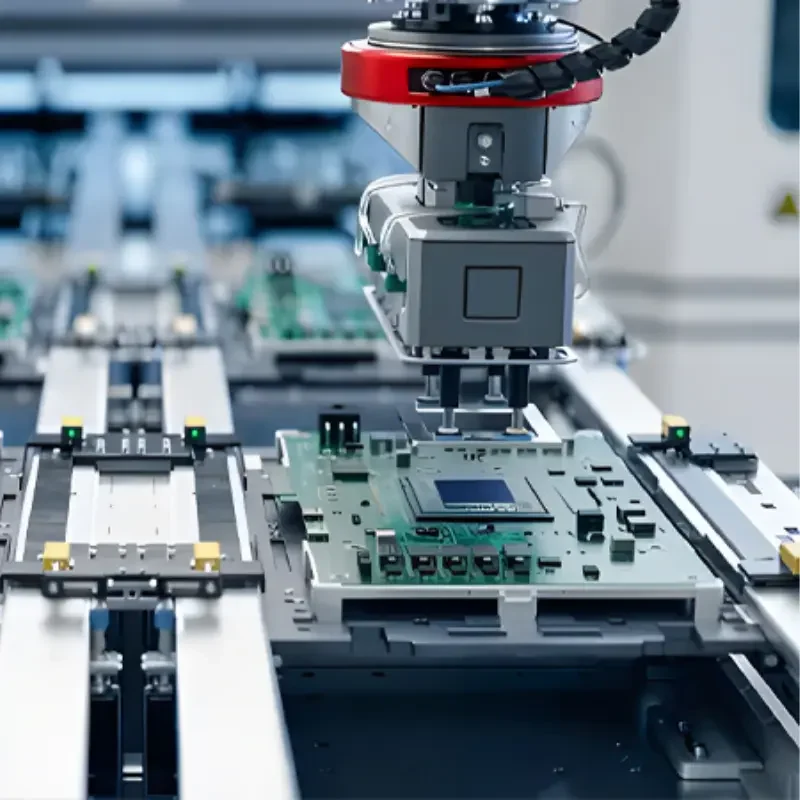
After the technical data is recovered, we manufacture PCB samples and complete PCBA assembly.
Our production process can include PCB fabrication, SMT assembly, DIP assembly, soldering, AOI inspection, X-Ray inspection, and other quality checks.
Step 6: Functional Testing and Equipment Verification
For old equipment projects, testing is the key.
A finished PCBA does not mean the project is complete.
The real question is:
Can it work after being installed back into the machine?
We can work with the customer’s equipment, test method, interface definition, fixture, or on-site feedback to perform power-on testing, communication testing, functional testing, and stability verification.
Step 7: Small-Batch Spare Board Production
After the sample is verified, the customer can produce a small batch of spare boards according to the number of machines and future maintenance needs.
This helps reduce the risk of long downtime in the future.
5. Case Study 1: Medical Equipment Power Board with High Repair Cost
We once worked on a medical equipment power board project.
The whole equipment had high value, but the original repair cost was also very high, and the lead time was long.
The customer had the damaged board, but no complete drawings or production files.
For this type of project, the value is not only the price of the board itself.
Once the equipment stops, it may affect equipment scheduling, service arrangements, and maintenance planning.
We first inspected the original board, identified the damaged area and key component condition, then rebuilt the PCB documentation and BOM data.
Because the board used many components, including imported parts, we also helped check alternative sourcing options.
After sample production, we worked with the customer for functional and stability verification.
In the end, the customer received not only a repair solution, but also a maintainable spare board plan for future use.
6. Case Study 2: Automation Line Control Board Discontinued
One customer had an automation line control board failure.
The whole production line was affected.
The original board was no longer available, and the customer had no production files.
Since the equipment was still in use, the customer wanted to restore operation as soon as possible and prepare spare boards for the future.
After receiving the original board, we analyzed the board structure and key functional areas, then recovered the PCB data, reconstructed the BOM, and verified the components.
Some components were old and required replacement review.
After the sample was assembled, the customer tested it on the machine.
After debugging and local optimization, the equipment resumed operation.
Later, the customer also ordered small-batch spare boards to avoid the same downtime problem in the future.
For the customer, this was not just making a board.
It turned an uncontrollable downtime risk into a manageable spare parts solution.
7. Case Study 3: Imported Equipment Communication Board Failure
Another customer had a communication board failure in imported equipment.
The original supplier could repair it, but the price was high and the lead time was long.
The customer had urgent production needs and could not wait.
The difficulty of this type of board is not only the hardware circuit.
It may also involve interface definitions, communication stability, signal protection, and device matching.
We first analyzed the original board, including the interface, power supply, communication ICs, protection circuits, and key signal paths.
Then we rebuilt the PCB and BOM data.
For the communication components, we carefully checked the model, parameters, and replacement feasibility to avoid communication problems caused by component differences.
After sample verification, the customer confirmed that the replacement board could meet the equipment requirements.
The biggest value of this project was shortening the waiting time and reducing dependence on the original repair schedule.
8. Risks That Need to Be Considered
We also explain the risks honestly to customers.
Old equipment board replacement is not always simple.
Common risks include:
Key ICs may be obsolete;
Firmware may not be readable;
The chip may be encrypted;
The original board may have hidden damage;
The customer may not have a test environment;
Communication protocols may be unclear;
Some component markings may be removed;
The multilayer PCB structure may be complex;
Several rounds of sample testing may be needed.
That is why we usually recommend:
Evaluate first;
Make samples second;
Verify the function third;
Then consider batch production.
Especially for projects involving firmware, communication, precision sampling, high-voltage power supply, high-frequency signals, medical equipment, or industrial safety control, careful evaluation is necessary.
Our job is to expose the risks early through engineering analysis, instead of discovering problems after batch production.
9. Why Choose Us?
Because we do not only provide PCB files.
We provide a complete engineering service for old equipment boards.
Our services can include:
PCBA repair;
Fault evaluation;
Non-destructive analysis;
PCB documentation recovery;
BOM reconstruction;
Schematic reconstruction;
Component replacement evaluation;
PCB prototyping;
SMT assembly;
DIP assembly;
Soldering;
Inspection;
Functional testing;
Small-batch spare board production;
Batch manufacturing.
From one failed board to a long-term maintenance solution, one team can handle the whole process.
The customer does not need to separately find a repair company, PCB designer, PCB factory, SMT factory, and testing team.
One project.
One team.
One responsible supplier.
A discontinued PCB does not mean the whole machine must be replaced.
If the equipment still has value, it may be possible to restore, repair, document, replace, and reproduce the board for future maintenance.
We help customers solve problems such as:
Equipment downtime;
Discontinued original boards;
Hard-to-buy spare parts;
High repair cost;
Long lead time;
Missing technical data;
No future maintenance plan.
For factories, the most expensive thing is often not the board itself.
It is the loss caused by machine downtime.
If your old equipment PCB is discontinued, or if the original repair cost is too high, you can send us the board for engineering evaluation.
Based on the actual condition, we can provide repair, documentation recovery, replacement development, or spare board production solutions.